The cheapest web design company depends on how you count
If you search for the cheapest web design company, you'll find lists of "affordable agencies", website builder roundups and companies advertising sites for $0 down. They're hard to compare because they charge in different ways. One asks for a one-time fee. Another charges monthly. A third gives you the tools and leaves the work to you.
To find the cheapest option that works, compare the same thing everywhere: what you'll pay over two years, and what you get for it. Two years is long enough to show the monthly fees and renewals, and short enough to matter for a small business budget.
| What people type into Google | US searches per month |
|---|---|
| cheapest web design company | 320 |
| cheapest web design | 260 |
| cheapest website | 1,900 |
| cheapest way to build a website | 110 |
| affordable web design company | 90 |
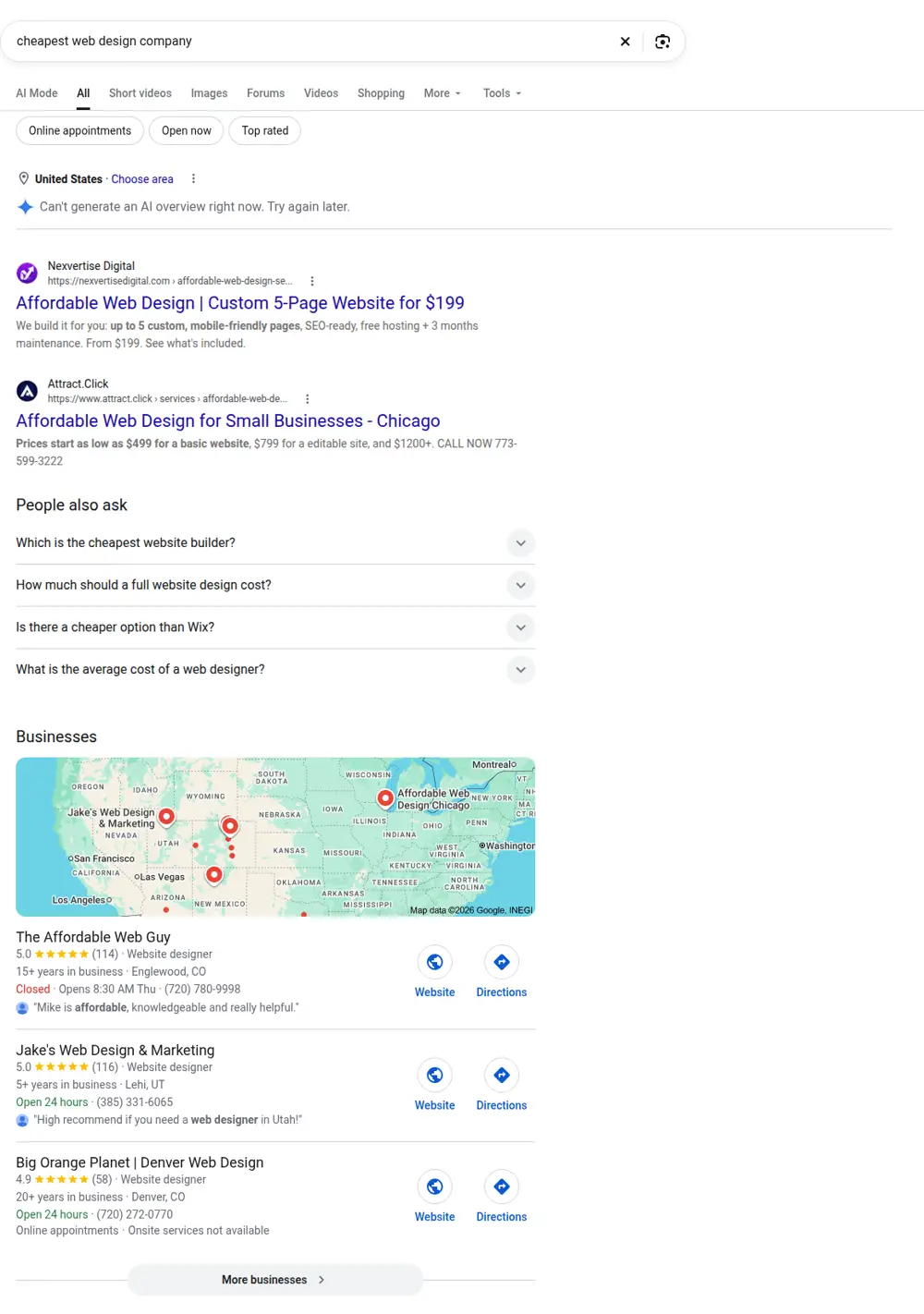
Many of the top results for this search are actually builder comparisons, not design companies. That says a lot: the cheapest "company" is often you, using a builder. If you want someone else to do the work, the comparison looks different.
Five types of low-cost web design providers
Most cheap web design offers fall into one of these groups.
1. Website builders that offer design help
Some builders sell a done-for-you service on top of their plans. GoDaddy, for example, lists its Website Design Services with a one-time build fee of $499.99 plus an annual hosting fee on its plans and pricing page (checked October 2026). The site lives on their platform, so moving it later usually means rebuilding.
2. Monthly website subscription companies
These companies build the site for little or nothing upfront and charge a monthly fee, often with a 12 or 24 month minimum. The first payment is the cheapest on the market. The two-year total often isn't. Read the cancellation terms closely, because some keep the site and the domain when you leave.
3. Freelance marketplaces
Platforms full of freelancers advertise sites for very low prices. Some sellers are excellent. Many are template installers who expect you to supply every word and photo. The starting price is usually for the smallest package, and extras like more pages, writing or SEO are sold on top.
4. Small fixed-price teams
Small teams that build many similar sites can charge less because they've cut out the parts that don't help you: sales calls, long proposals and custom work nobody needs. We're one of these. The price is set before work starts and covers the pages, the writing and the setup.
5. Local agencies with "starter" packages
Some local agencies offer a cheap entry package to win clients. These can be good value if the package includes real pages for your services. Watch for very small page counts and upsells to monthly SEO plans.
Two-year cost comparison
Here's how the totals compare for a small local business site over two years. Running costs like hosting, the domain and email are included where they apply.
| Option | Upfront | Monthly | Approx. two-year total | Who writes it |
|---|---|---|---|---|
| Free builder plan | $0 | $0 | $0 | You, with ads and a builder address |
| Paid builder plan | $0 | About $15 to $40 | About $360 to $960 | You |
| Builder's design service | About $500 | Hosting plan | About $500 plus hosting | Their designer, with your input |
| Monthly subscription company | $0 to $300 | About $50 to $300 | About $1,200 to $7,500 | Them |
| Budget freelancer | $300 to $1,500 | Hosting, about $10 to $30 | About $540 to $2,200 | Varies |
| SiteCostly | $299 to $630 | Hosting, domain, email | Build plus running costs | Us |
These are ranges, not quotes. They show why the cheapest sticker price is often not the cheapest total. A $0 down subscription at $99 a month costs $2,376 over two years, and you may not own the site at the end.
How to find the cheapest web design company that actually works
The cheapest option is only cheap if the site does its job. For a local business, that job is to show up when people search for your service in your area and get them to call. Use these steps to compare offers fairly.
Step 1: Count the pages that matter
Ask each company how many service and area pages you'll get. A site with one page per service and one per main area has many more chances to show up in search than a four-page site. Compare the price per useful page, not the total.
Step 2: Ask who writes the content
If you have to write everything, add your time to the price. A small business site needs a few thousand words. Writing them well takes most owners several evenings.
Step 3: Check ownership
The domain should be registered in your name. Ask what happens to the site if you stop paying. If the answer is "it goes offline" or "we keep it", the low price comes with a hidden cost.
Step 4: Add up the monthly fees
Multiply every monthly fee by 24. Add renewals, which are often higher than first-term prices. That's your real comparison number.
Step 5: Look at live work
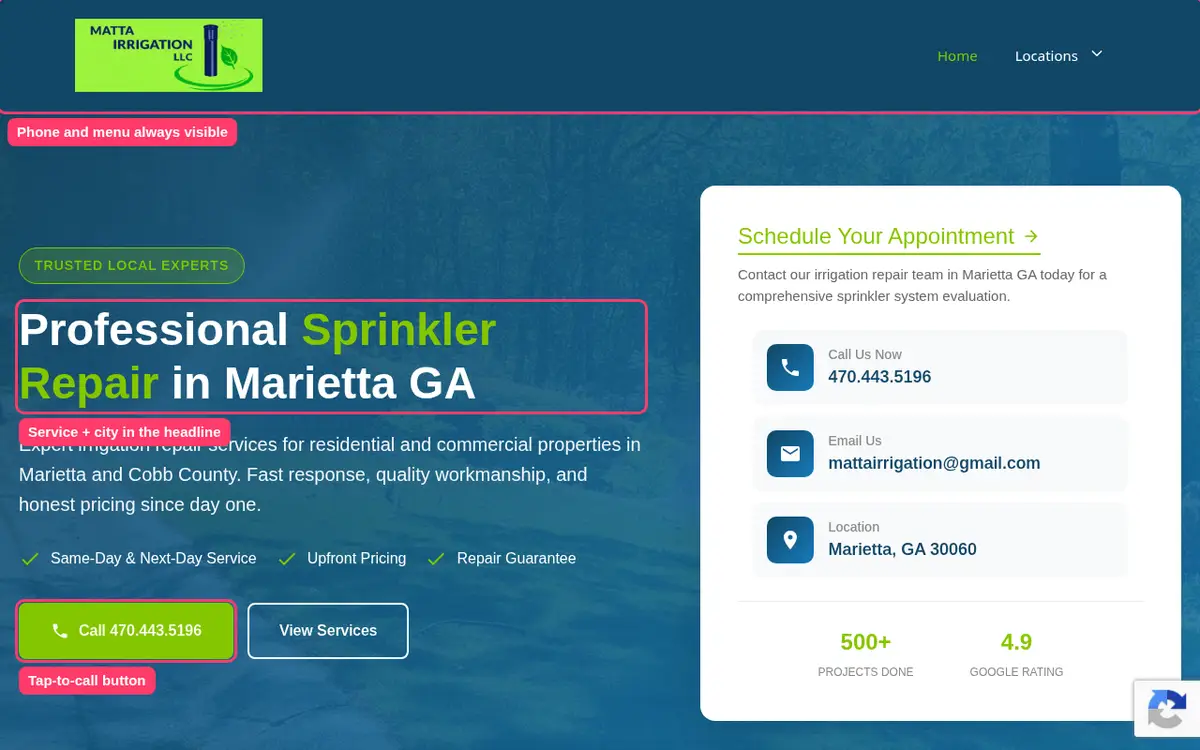
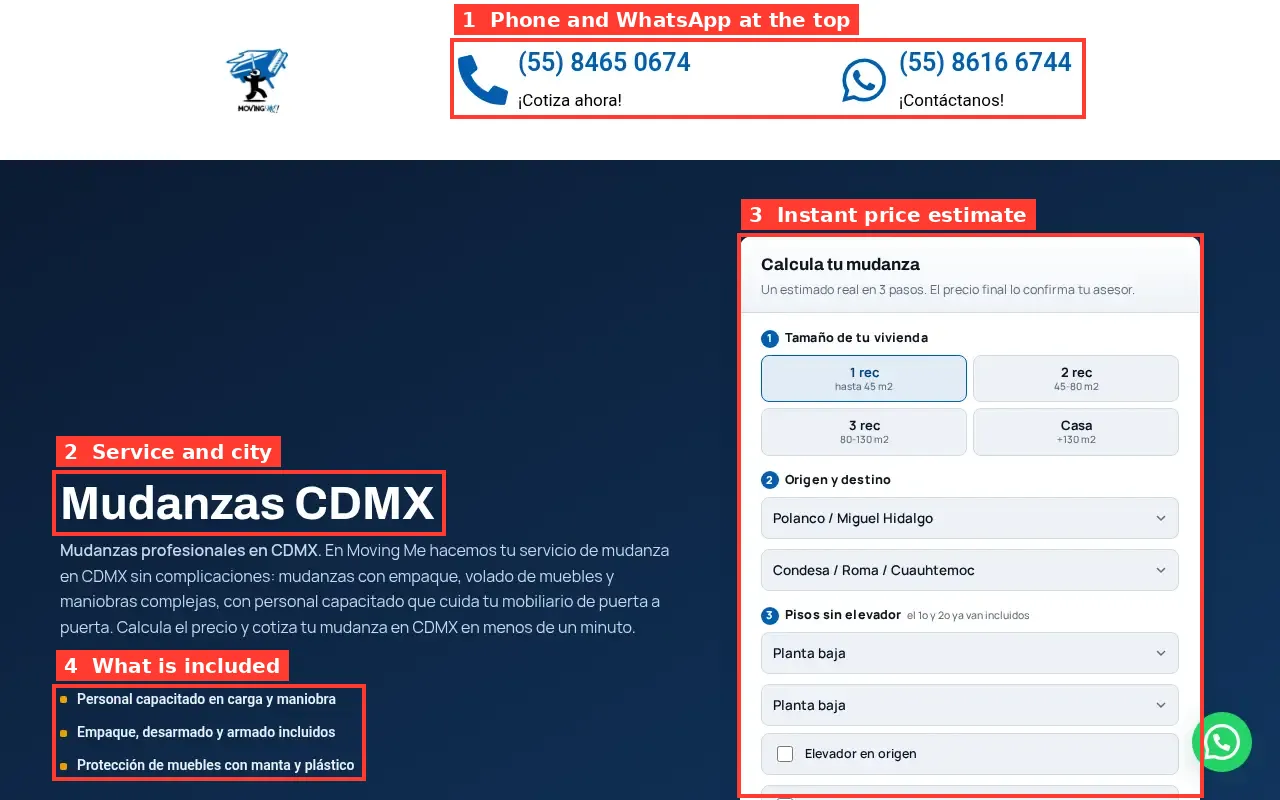
Ask for links to three sites they built for businesses like yours. Open them on your phone. Are they fast? Can you find the phone number in two seconds? Do they show up when you search for that business's service and city?
Step 6: Read the contract
Check the minimum term, cancellation fees, who owns the content and what's included in support. A short, clear contract is a good sign.
Cheapest web design and hosting together
Many low-cost companies bundle hosting with the build. Bundles are convenient, but check what hosting costs after the first term. Intro prices are often a fraction of the renewal price.
For context, these are entry-level builder and hosting prices we checked on the providers' own pages in October 2026:
| Provider | Entry price shown | Renewal or later price |
|---|---|---|
| Hostinger Website Builder (Premium) | $2.49 a month on a 48-month term | Renews at $10.99 a month |
| IONOS Website Builder (Plus) | $1 a month for the first year | Then $20 a month |
| Wix (Light) | $17 a month, billed yearly | Domain free for the first year only |
| Weebly (Personal) | $13 a month, billed yearly | $16 month to month |
Notice the gap between first-term and renewal prices. If you're comparing the cheapest web design and hosting deals, the renewal price is the one you'll pay for most of the site's life.
Why the cheapest price can cost more
We see the same pattern often. A business buys the cheapest site it can find. A year later it has almost no calls from the site, so it pays someone else to rebuild it. The total is now higher than a better site would have cost in the first place.
The usual causes:
- Too few pages. The site can't rank for the services people search.
- Generic text. Google can't tell what the business does or where.
- No local setup. No Google Business Profile connection, no area pages.
- Locked-in platform. Moving to something better means starting over.
None of these are about price. A low-cost site can avoid all four. That's why the comparison steps above matter more than the number on the front of the offer.
What makes SiteCostly cheap
Our price is $299 for the home, about and contact pages, plus $15 for each extra page, never more than $630. Here's how we keep it there without skipping the work:
- The calculator replaces the sales call. You see your searches, your page plan and your price before we ask for an email.
- Page plans come from real Google searches. We don't add pages to pad the price or leave out pages that would bring work.
- Software handles the setup. Hosting, sitemaps and page structure are automated, so our time goes into writing and checking.
- Three people, no outsourcing. Julián Durango, Luisa Salazar and Efraín Zea work on every site.
You review a draft before launch, and the domain stays in your name. If you'd rather talk before you decide, book a free 30-minute call.
Price per page: a fairer way to compare
A total price on its own doesn't tell you much. Dividing it by the number of useful pages does. Here's an example for a local business that needs a home, about and contact page plus seven service and area pages, ten pages in all.
With us, that's $299 for the first three pages plus 7 x $15, or $404, fixed. That's about $40 per page, and the text is written for you.
Run the same sum on any quote you get. A $250 offer with four pages is about $63 per page, and you may still have to write them yourself. A $1,500 freelancer quote for ten written pages is $150 per page. Neither is wrong, but now you're comparing the same thing.
Cheap vs cheapest: which do you need?
The cheapest offer is right when you need a placeholder: a page with your name, phone number and hours so people can confirm you exist. A free builder or a one-page tool is fine for that.
If you want the site to bring in new customers, look for the cheapest offer that includes real service and area pages, basic SEO and a domain in your name. That's usually not the lowest price on the market, but it's the cheapest way to get a site that pays for itself. Our page on cheap web design goes deeper into what a good low-cost site should include and where cheap offers cut corners.
If you're a small business weighing your options more broadly, our guide to small business web design covers what pages and features a small business site needs.
Questions to ask the cheapest web design company you find
- What exactly is included at this price?
- How many pages, and who writes them?
- What will I pay every month, and does that price go up at renewal?
- Is the domain registered in my name?
- Can I take the site with me if I leave?
- How long is the contract, and what does cancelling cost?
- Can I see three live sites you built for businesses like mine?