Why musicians still need a website
Streaming platforms, social media and link-in-bio pages all help people discover your music. None of them belong to you. Algorithms change, accounts get hacked and platforms come and go. A musician website is the one place that's yours, where every link points, where your email list lives and where a booker or journalist can find everything in one place.
It's also the most professional thing you can send. A booker who gets a link to a clean site with music, video, photos and tech details takes you more seriously than one who gets a social profile.
| What people type into Google | US searches per month |
|---|---|
| websites for musicians | 27,100 |
| best musician website | 260 |
| musician website maker | 210 |
| create a musician website | 170 |
"Musician website" and "websites for musicians" get about 27,100 searches a month, per DataForSEO, though a large share of those people want a free builder. "Best musician website" and "musician website templates" get about 260 each, "musician website maker" about 210 and "create a musician website" about 170. "Musician website design" gets about 110, and people looking at "musician website examples" add about 90 more.
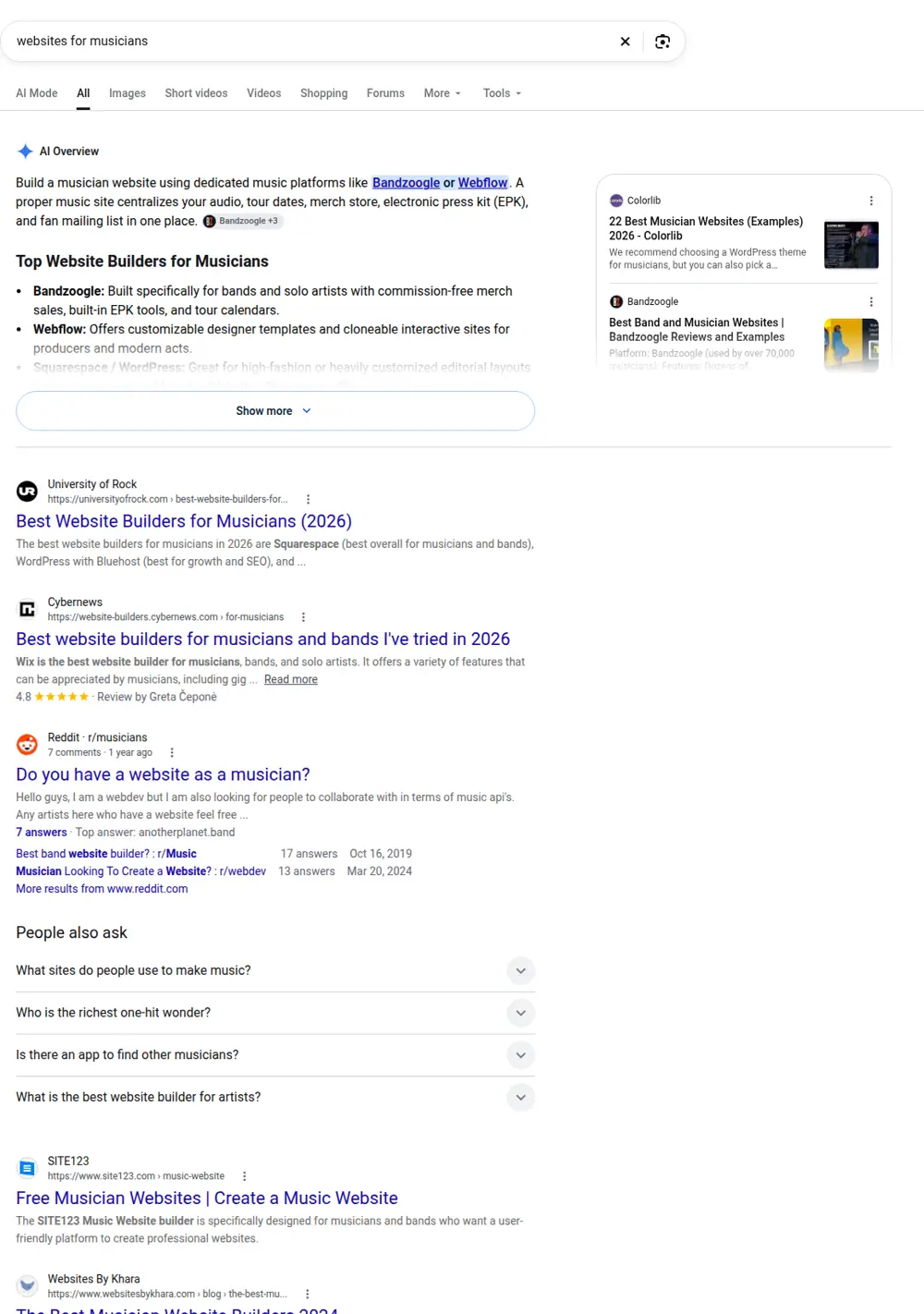
These results are full of DIY builders. If you enjoy building, that's a fine route. If you'd rather spend the time writing, practicing and playing, a site built for you saves the hours and usually loads faster.
Who visits a musician website
Fans. They want to listen, watch, see upcoming shows, buy merch and follow you.
Bookers, venues and festivals. They want a short bio, your draw or audience, live videos, a stage plot, a tech rider and a contact.
Press and playlist curators. They want the story, high-resolution photos, the new release and links.
Students and parents. If you teach, they want lesson details, prices, availability and how to book.
Event clients. Couples and event planners booking a band or soloist for a wedding or corporate event want song lists, packages, videos and availability.
Each group needs a clear path, and most musician sites only serve one.
Pages a musician website needs
Home page
Your latest release or video, a player, the next few dates, an email signup and links to your streaming profiles. Keep it focused. A home page with ten competing sections hides the music.
Music
Every release with cover art, an embedded player from the platform you use, credits, lyrics if you want to share them and buy or stream links. A page for each album or EP also helps people find your releases in search.
Shows and tour dates
Upcoming dates with venue, city, time and ticket links. Many musicians sync dates from a service so they update automatically. Past shows move to an archive, which is useful proof for bookers.
Videos
Live performance videos matter most for bookers. Music videos and sessions matter most for fans. Embed from YouTube or Vimeo so the site stays fast.
Electronic press kit (EPK)
A page, ideally not linked in the main menu but easy to share, with:
- Short and long bio
- High-resolution press photos to download
- Your best live videos
- Recent press quotes and notable shows
- Stage plot and tech rider
- Booking contact
A clear EPK saves you writing the same email again and again.
Merch
A small shop or a link to your merch platform. Show photos of the real items and the prices.
About
Your story in your own voice. For bands, introduce each member.
Contact
Separate contacts for booking, press and general messages, if you have them.
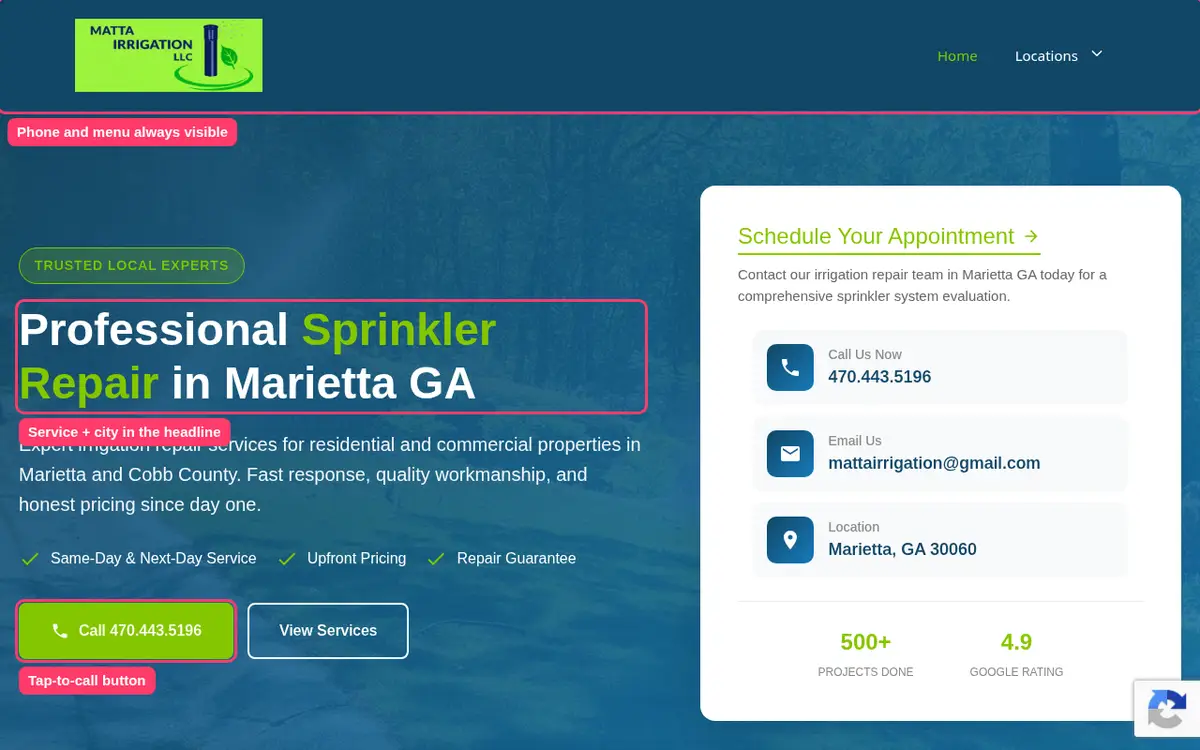
Musician website design that fits your sound
Your website should feel like your music. A jazz trio, a metal band and a singer-songwriter shouldn't have the same site. Good musician website design takes cues from your artwork, photos and type, so visitors recognize you instantly. At the same time, the structure stays simple: music, shows, videos, EPK, contact. Fancy effects slow pages down and distract from the music.
Classical and jazz musicians
A classical musician website or jazz musician website has different priorities. Repertoire lists, ensembles you've played with, education, competitions and recordings matter more than merch. Presenters and orchestras look for a detailed bio in several lengths, a repertoire page and high-quality audio. Teaching and masterclass pages are often part of the site too.
Wedding and event musicians
Event musicians sell to clients, not fans. Their site is closer to a service business: packages, song lists, video of performances at real events, reviews from couples and planners, the areas you travel to and a booking inquiry form. Showing starting prices helps people decide. If you play at weddings, our page on wedding venue website design covers the venue side.
Music teachers and lesson studios
Many musicians earn a steady part of their income from teaching. Parents and adult students search for lessons by instrument and city, and they pick a teacher whose website answers their questions clearly. If you teach, your website should have:
- A page for each instrument or subject you teach
- Who you teach (ages, levels) and how lessons work (in person, online, at home)
- Prices and packages
- Your background and teaching approach
- Policies on cancellations and make-up lessons
- Reviews from students and parents
- A booking or inquiry form with available times
A teacher with clear lesson pages can rank in local searches, which brings students without paying for ads.
Your email list matters more than followers
Social reach goes up and down. An email list stays yours. Give fans a reason to join: an early listen, a free download, presale codes or a short behind-the-scenes note. Put the signup on the home page, on every release page and in the footer. When you announce a show or release, your list is the most reliable way to reach the people who care.
Planning a release on your website
A release is the moment your site gets the most visitors, so plan it a few weeks ahead:
- Before release. Add a page for the single or album with the cover, release date and a presave link. Put it on the home page and send it to your list.
- Release day. Switch the presave to streaming and buy links, embed the player and share the page, not just a streaming link. Fans who land on your site can also join your list, see shows and buy merch.
- After release. Add lyrics, credits, the music video, press quotes and photos from the launch show. The page keeps working for years when people search for the song.
Session musicians, producers and DJs
Not every musician is an artist with releases. Session musicians need a page of credits, the styles they play, audio samples and how remote sessions work, with rates or a starting price. Producers and mix engineers need before-and-after audio, a client list, studio gear and services with prices. DJs sell to venues and event clients, so they need mixes, event photos, packages and the areas they cover. Each of these is closer to a service business than a band site, and the website should be built that way.
Fan support and memberships
Many musicians earn directly from fans through memberships, crowdfunding or tips. If you use a membership platform, link it clearly from the site and explain what supporters get: early releases, behind-the-scenes videos, livestreams or credit on the next record. A short, honest page about why support matters works better than a hidden "donate" button in the footer.
Licensing and sync
If you want your music used in film, TV, games or ads, a licensing page helps. List instrumental versions, stems and the contact for licensing, and say who owns the rights. Music supervisors are busy and work with artists who make it easy to clear a track.
Accessibility and international fans
Fans may find you from anywhere. Use clear text alongside images, add captions to videos and avoid putting key information like dates only inside a flyer image, where screen readers and search engines can't read it. If you tour abroad or have fans in other countries, list local times and ticket links in the right currency where you can.
Booking for venues and private events
Bookers and event clients need a fast way to check availability and send details. A booking page with a short form, asking for the date, city, venue or event type, expected audience and budget range, gives you what you need to reply with a quote. Add your typical set lengths, band configurations (solo, duo, full band) and what you bring, like sound or lighting. For private events, a few reviews from past clients and a short video from a real event help people decide.
Photos that work for press and promoters
Promoters and journalists need photos they can use without asking. Offer a few horizontal and vertical options in high resolution, with photographer credits, plus a logo file if you have one. Keep them current. A press photo from five years ago with a former member creates confusion. Name the files clearly, like your band name and the year, so people can find them later.
Musician website examples: what good ones share
When we look at musician website examples that work, they tend to keep things simple. The newest music is on the home page with a player that starts in one tap. Dates are current and link straight to tickets. The press kit is one click away for bookers. There's a single email signup with a clear reason to join. And the site feels like the artist, with photos and colors that match the latest release. Most of the effort goes into keeping it current rather than redesigning it.
Lyrics, credits and liner notes
Fans love details. Adding lyrics, songwriting and production credits and a short note about each song turns a release page into something people read and share. It also helps search engines connect your name with your songs, so people who search for a lyric line can land on your own site instead of a lyrics database full of ads.
Musician website templates and builders
Musician website templates and builders are everywhere, and many are designed for bands. They're quick, but they often look alike, and some load slowly because of heavy players and effects. If you use a template, focus on what matters: a fast player, current dates, a real EPK and an email signup. Those are what bookers and fans use.
Common mistakes on musician websites
- The latest release is buried below old news.
- Tour dates from last year.
- No booking contact, or only a social link.
- Press photos too small to print.
- A huge background video that makes the site slow on phones.
- Five different players for the same song.
- No email signup.
Hosting and keeping it fast
Musician websites can get slow quickly because of players, videos and large photos. We embed players and videos efficiently, compress images and keep pages light, so the site loads fast on phones at a gig or on the way home from one. Hosting is included in the setup and costs little to maintain.
Real Search Console data
This is from a service site we built. It shows how traffic builds as pages start to rank. Release pages and lesson pages work the same way, collecting people who search for your name, songs and local lessons.
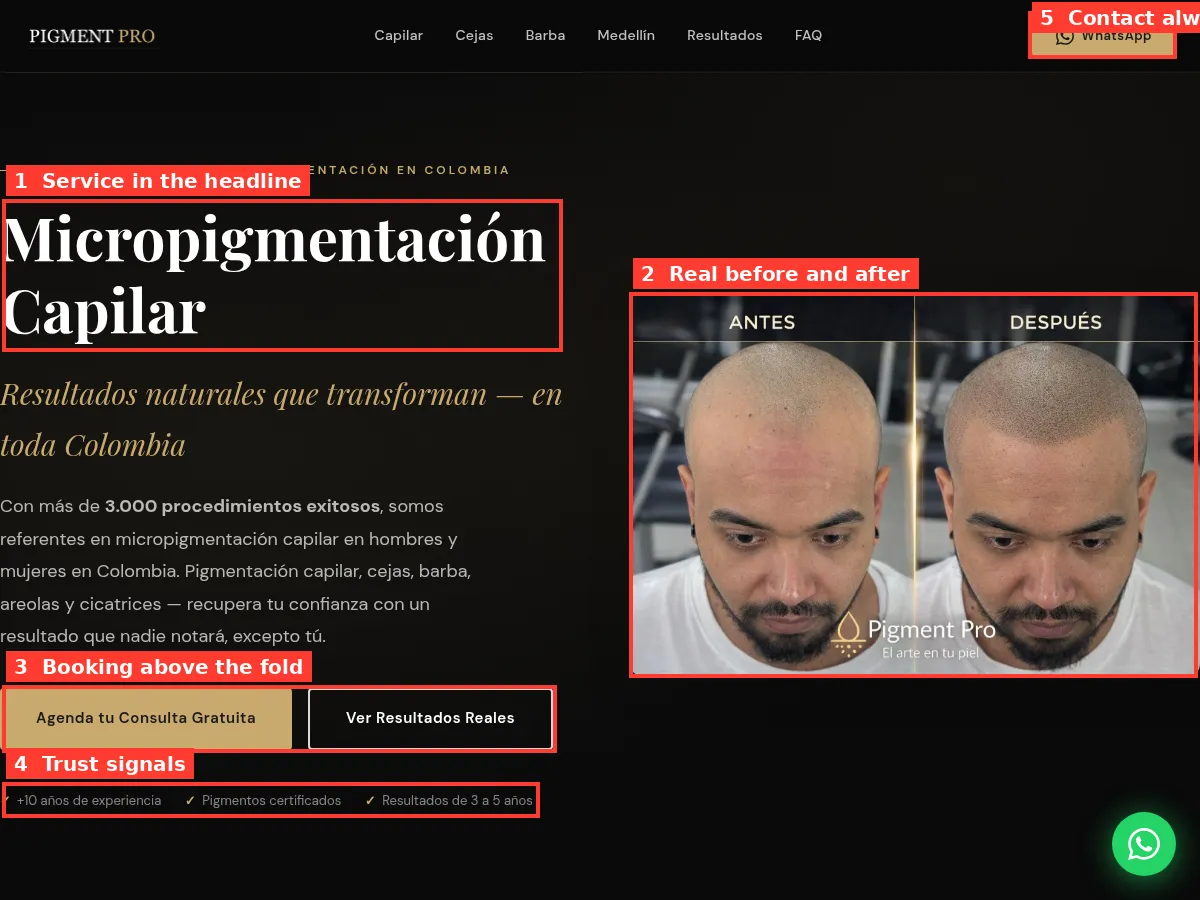
How we build your musician website
You price the site with the calculator. Then you send your releases and streaming links, photos, videos, bio, dates and EPK materials. If you teach, you add lesson details and prices. We plan the pages, write the text in your voice, design the site to match your sound and connect your email signup and date service. You review the draft and we launch.
Price
The base is $299, every extra page costs $15 and the maximum is $630. A band with music, shows, videos, an EPK, merch and two release pages adds six pages, so $389. A teacher with four instrument pages and a policies page adds five, so $374.