What patients search for before they book
"Dentist near me" gets about 1.83 million searches a month in the US, which makes it one of the largest local searches of any kind. People also search by city. Here's the monthly volume for "dentist" plus some of the largest US cities:
Houston leads at 12,100 searches a month, then Philadelphia at 9,900 and Chicago at 8,100. Even mid-size cities get thousands of searches. Most of these people are ready to book. A dental website's job is to make that easy.
| What people type into Google | US searches per month |
|---|---|
| dental website | 1,000 |
| dental website design | 590 |
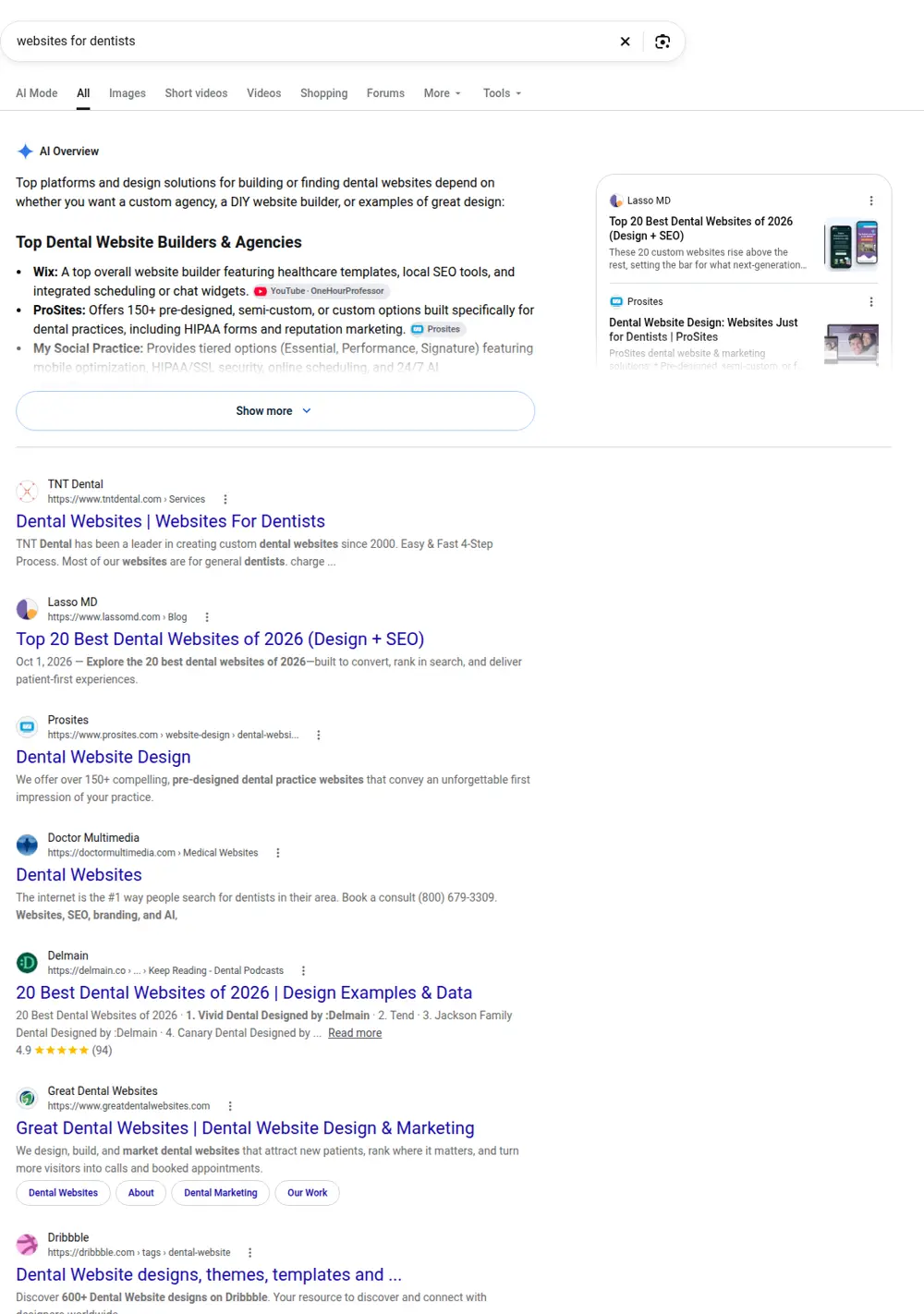
What a dental website needs to do
A dental website has three jobs:
- Show up when nearby patients search for a dentist or a treatment
- Reassure them that you're the right practice: close, friendly, accepts their insurance, good reviews
- Get the appointment, by phone or online, in as few taps as possible
Everything on the site should serve one of those three.
The pages a dental practice usually needs
| Page | What it should include |
|---|---|
| Home | Your city or neighborhood, a booking button, insurance summary, reviews |
| General dentistry | Cleanings, exams, fillings, X-rays, what a first visit is like |
| Cosmetic dentistry | Whitening, veneers, bonding, with real before-and-after photos if patients consent |
| Implants | The process, timeline, rough cost range, financing |
| Clear aligners | Invisalign or other brands you offer, who's a good fit |
| Emergency dentist | Same-day availability, after-hours number, what to do while you wait |
| Children's dentistry | Age you start seeing kids, how you make visits easy |
| Insurance and payment | Plans you accept, in-network status, financing, membership plans |
| About and team | Dentists, hygienists, staff photos and bios |
| Location | Address, parking, public transit, map, hours |
Each treatment page can rank for its own searches, like "dental implants [city]" or "emergency dentist near me". A single "Services" page listing everything can't.
What patients look at first
When someone lands on a dental site from a phone, they usually check these things in a few seconds:
- Do you take my insurance? Put the list of accepted plans on the home page, or a clear link to it.
- Where are you, and when are you open? Address, hours and whether you open early or on weekends.
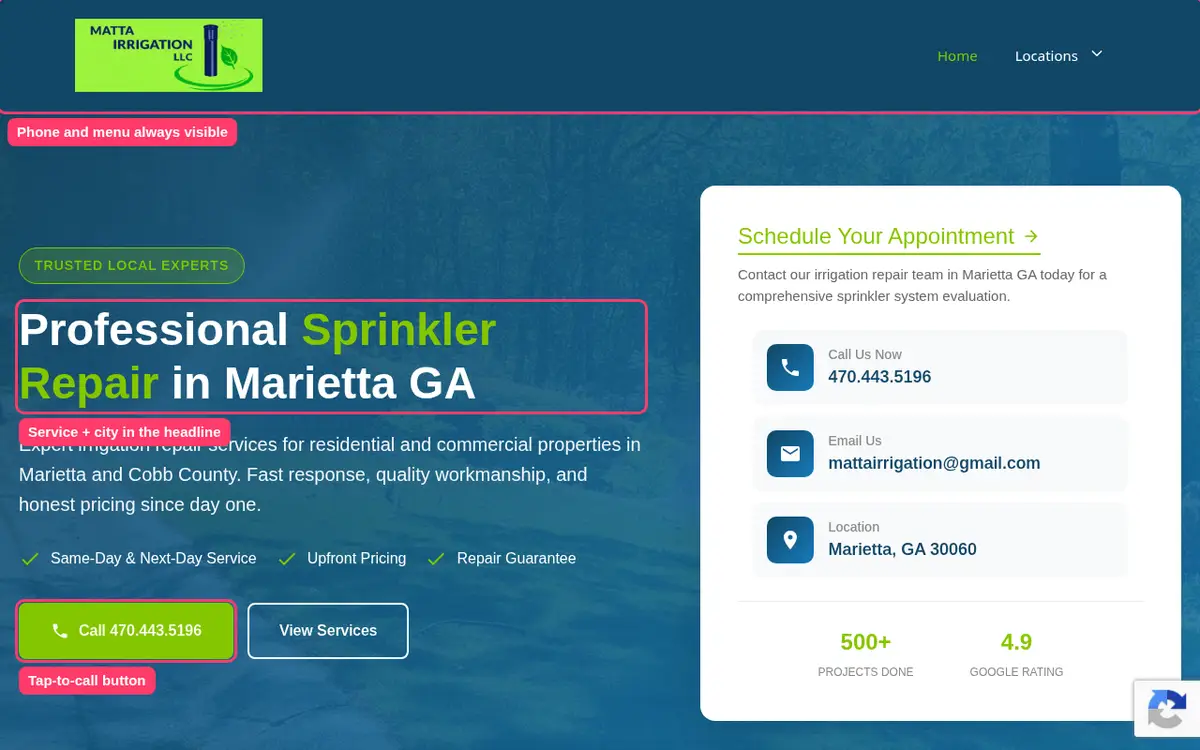
- Can I book now? An online booking button or a tap-to-call button that's always visible.
- Are you good? Your Google rating, a few short reviews and photos of your real team and office.
- Will it hurt, and what will it cost? Gentle care, sedation options if you offer them, and price ranges for common treatments.
Health information and privacy
A dental website should never ask patients to send health details through a regular contact form. Standard web forms and email aren't built for protected health information. We keep the contact form simple, asking only for a name, phone number and preferred time, and link to your practice's secure patient portal or booking system for anything else. If you use a booking tool like your practice management software's online scheduler, we connect it.
We're not lawyers, and HIPAA questions should go to your compliance advisor. Our job is to keep the site from creating risk in the first place.
Showing up in the map results
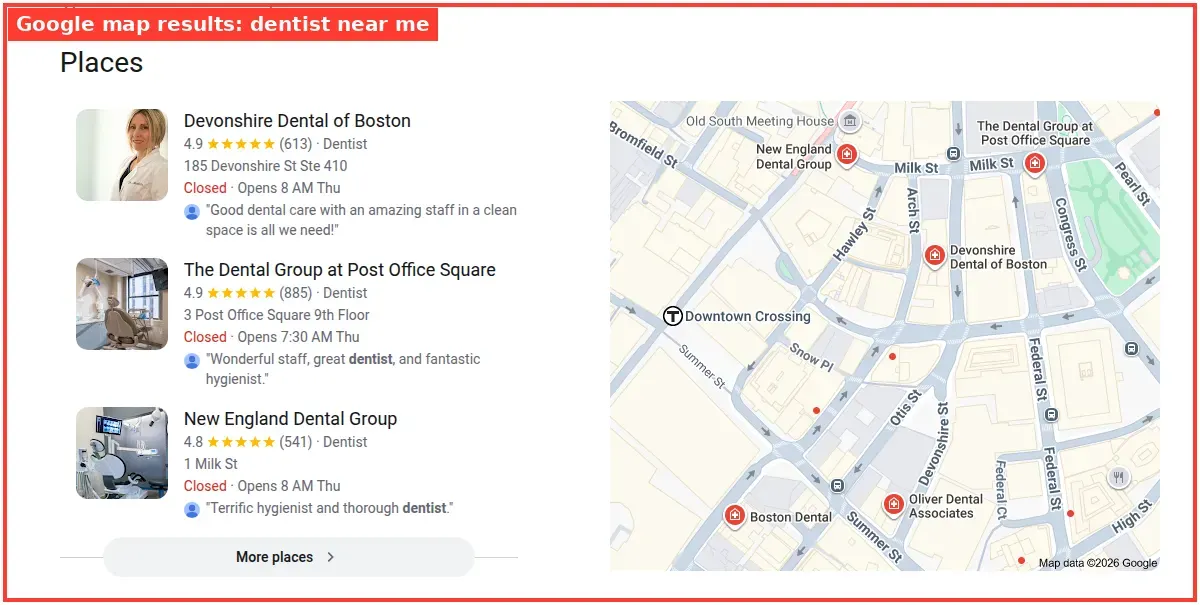
That's the map pack for "dentist near me" searched from Boston. The three practices shown get a large share of the calls. Their spots depend mostly on their Google Business Profiles, the number and quality of their reviews, and how close they are to the person searching. The website helps by confirming the same name, address and phone, and by having clear treatment pages that match what people search.
Reviews and before-and-after photos
Reviews matter more for dentists than for most businesses, because patients are nervous and want reassurance. A few tips:
- Feature short, recent reviews that mention specific things, like "no pain" or "great with my kids".
- Ask happy patients for a Google review right after their visit, with a direct link.
- For before-and-after photos, get written consent and follow your state dental board's rules on advertising.
Mistakes we see on dental websites
- No insurance information. It's the first question most patients have.
- Booking hidden on a contact page. Put it at the top of every page.
- Stock photos of models with perfect teeth. Real photos of your team build more trust.
- A long welcome letter on the home page. Patients want location, insurance and booking first.
- Slow pages from huge images. We compress every photo.
A real growth curve from one of our sites
This is real Google Search Console data from one of our client sites, with the name hidden. It's not a dental practice. We show it as an example of what happens when a site is planned around real searches.
How we build a dental website
- Run the calculator with "dentist" and your city. You'll see local searches and the pages it suggests.
- Send your details: treatments, insurance plans, hours, team photos and any booking tool you use.
- We write the pages in plain language that patients understand.
- We design and build the site, mobile first, with booking always in reach.
- You review, we launch, and we connect your Google Business Profile.
How much a dental website costs
With us, $299 for the base site and $15 for each extra page, never more than $630. Most practices need 8 to 12 pages, so they land near the middle of that range. Dental marketing agencies often charge thousands upfront plus monthly fees. For a full breakdown, see how much a website costs. For related practices, see medical website design or websites for chiropractors.
Dental website templates, companies and what to compare
Dental website templates and themes are easy to find, and some come with booking forms built in. The trouble is that a template doesn't know which treatments people search for in your town. That's why so many dental clinic websites look alike and rank alike.
If you're comparing dental website design companies, look at the best dental websites in your own area and ask why they rank. Usually it's simple: a page for each treatment, clear insurance information, real photos of the team, and a booking button on every page. Ask any dental website company for the price in writing and for live sites you can check.