How clients look for an architect
Most homeowners and developers don't start with a firm's name. They search for what they need and where: "residential architect near me", "architect for home addition", "commercial architect Chicago". Then they open a few portfolios and decide in minutes whether a firm feels right.
That makes an architect's website do two jobs at once. It has to show up for those searches, and it has to make your work look as good online as it does in person.
Searches for "architect" plus a city name are far higher in some cities than others, per DataForSEO. Chicago stands out, partly because the city is known for its architecture, so some of those searches come from tourists and students as well as clients.
| What people type into Google | US searches per month |
|---|---|
| websites for architects | 1,600 |
| architect website design | 590 |
| architect portfolio website | 260 |
| architect firm website | 90 |
About 1,600 people a month search for "websites for architects" and close variants, and another 590 for "architect website design". Many are firms looking for examples or a designer. Others want an architect portfolio website they can build themselves.
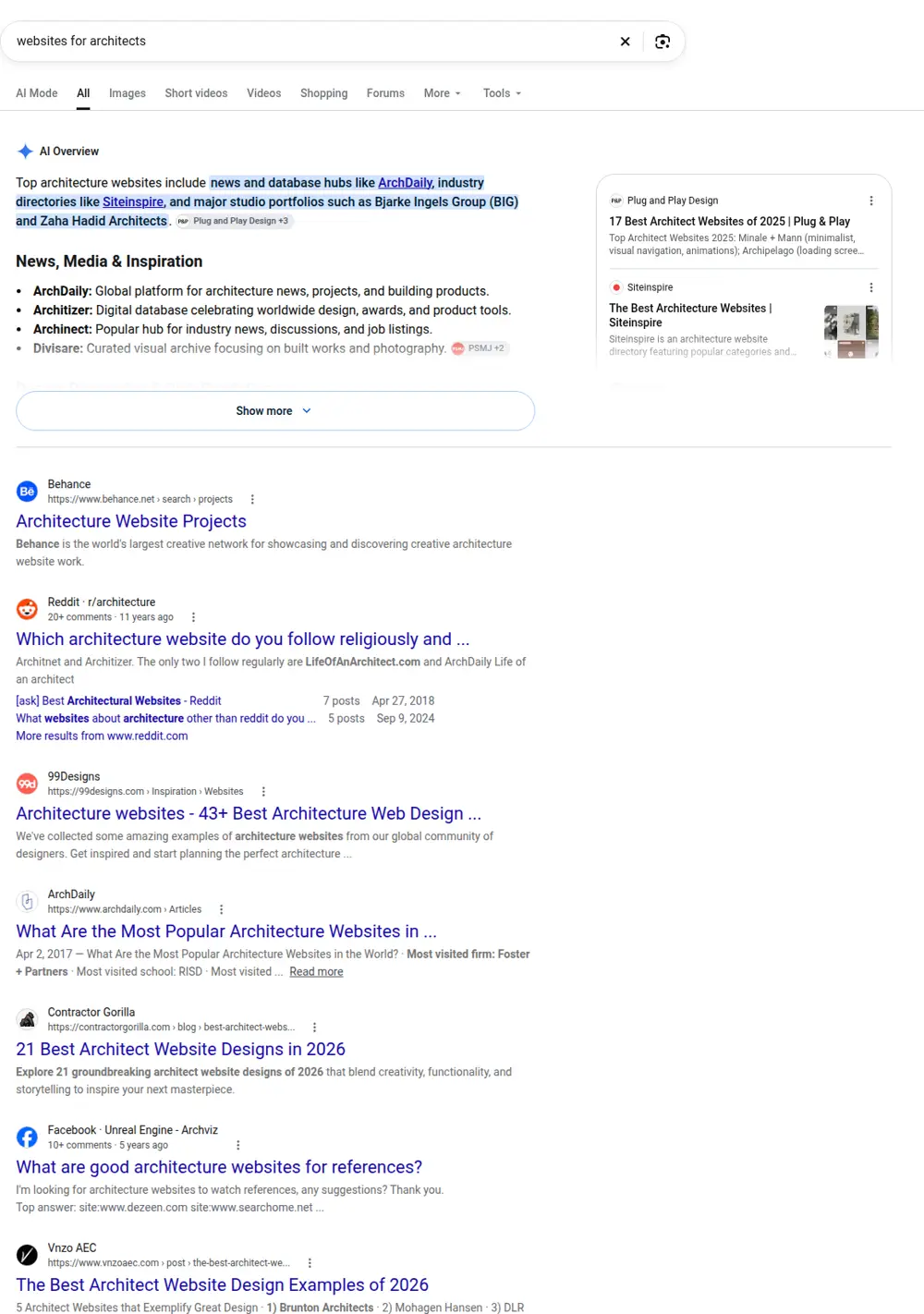
The top results are mostly galleries of design inspiration and directory listings. Very few explain how an architecture firm's site can bring in new projects. That's what this page covers.
What a good architect website includes
A project portfolio that tells stories
Photos alone don't sell a firm. A strong project page shows the finished building and explains it: the client's brief, the site constraints, the decisions you made and the result. Add the location, size, type and year. Clients looking for a similar project will read every word.
Group projects by type, like residential, commercial, interiors or adaptive reuse, so visitors can find the work that matches their plans.
Service pages
"Architecture services" is too broad to rank. Separate pages for the work you want more of do better: custom homes, home additions, renovations, commercial buildings, tenant improvements, permit drawings. Explain what's included, how long it usually takes and how fees are set.
Area pages
If you work across a metro area, pages for the main cities and suburbs help clients nearby find you. Mention local permit offices, zoning quirks or historic districts you've worked in. That detail is hard for a competitor to copy.
About and team
Clients hire people. Show your principals and team with real photos, licenses, memberships like the AIA if you hold them, and a short note on your design approach.
A clear way to start
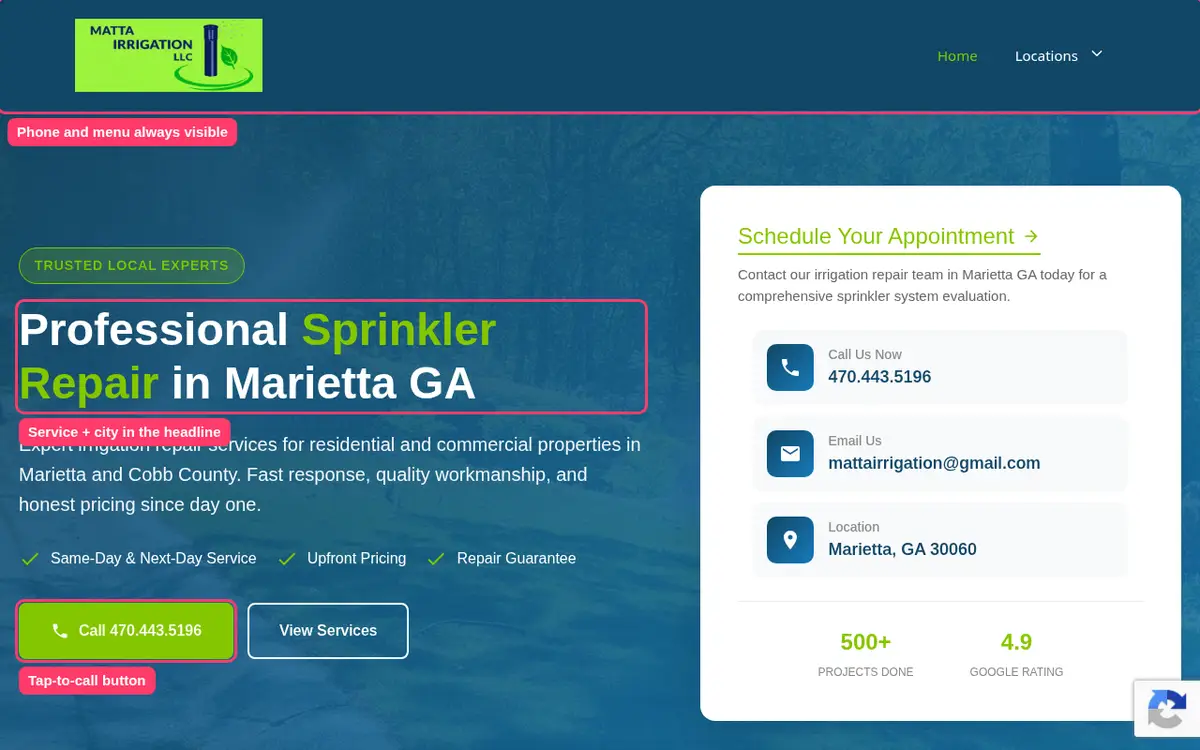
A short inquiry form asking for project type, location, budget range and timeline saves both sides time. Add a phone number and an email for people who prefer them.
Architect portfolio website or business website?
Many architects start with a portfolio site built to impress other designers: full-screen images, minimal text, hidden menus. It looks beautiful and rarely brings in clients, because Google has little text to read and visitors can't find what you offer.
A business website for an architecture firm keeps the strong visuals but adds what clients need: services, areas, process, fees and contact details. You don't have to choose. Large project images and clear text work well together.
Architect firm website mistakes
These come up again and again when we look at firm websites:
- Projects with no text. A gallery of ten photos and a title doesn't rank and doesn't explain your thinking.
- Huge, uncompressed images. They make the site slow, especially on phones.
- No list of services. Visitors have to guess whether you do the type of project they're planning.
- No location. The site never says where you work.
- Hard-to-find contact details. Hidden behind an icon or only in the footer.
- Stale news pages. A "latest news" section last updated three years ago makes the firm look inactive.
Architect website templates
Architect website templates are popular because they look polished out of the box. They're a fine place to start if you replace the sample projects with your own, write a real page for each project and service, and compress every image before uploading. The template only gives you the frame.
Real Search Console data
This is data from a service business site we built, not an architecture firm. It shows how a site with focused service and area pages picks up search traffic month by month after launch.
How we build your architect website
- You run the calculator. Choose your business and city. You see real monthly searches, the pages they support and your price.
- We plan the pages. Service, project-type and area pages, based on what clients search for near you.
- We write and build. You send project photos and a few notes for each project. We write the pages and set up the site.
- You review, we launch. You get a draft to check, and we set up page titles, a sitemap and your Google Business Profile.
Price
$299 for the home, about and contact pages, plus $15 for each extra page, never more than $630. A firm with eight project pages and four service pages would pay $299 plus 12 x $15, or $479.