Why an author website still matters
Many authors wonder if they need a website when they already have a publisher page, an Amazon author page and social media accounts. They do, for a simple reason: everything else belongs to someone else. Publisher pages change when you change publishers. Retailer pages show your competitors next to your book. Social platforms change their rules and their reach.
Your author website is the one address you control. A website for author news, books and events that you own outlasts every platform change. It's where you send readers from the back of every book, where your mailing list lives and where an agent, journalist or festival organizer goes to check who you are.
| What people type into Google | US searches per month |
|---|---|
| websites for authors | 2,400 |
| author website design | 170 |
| author web design | 70 |
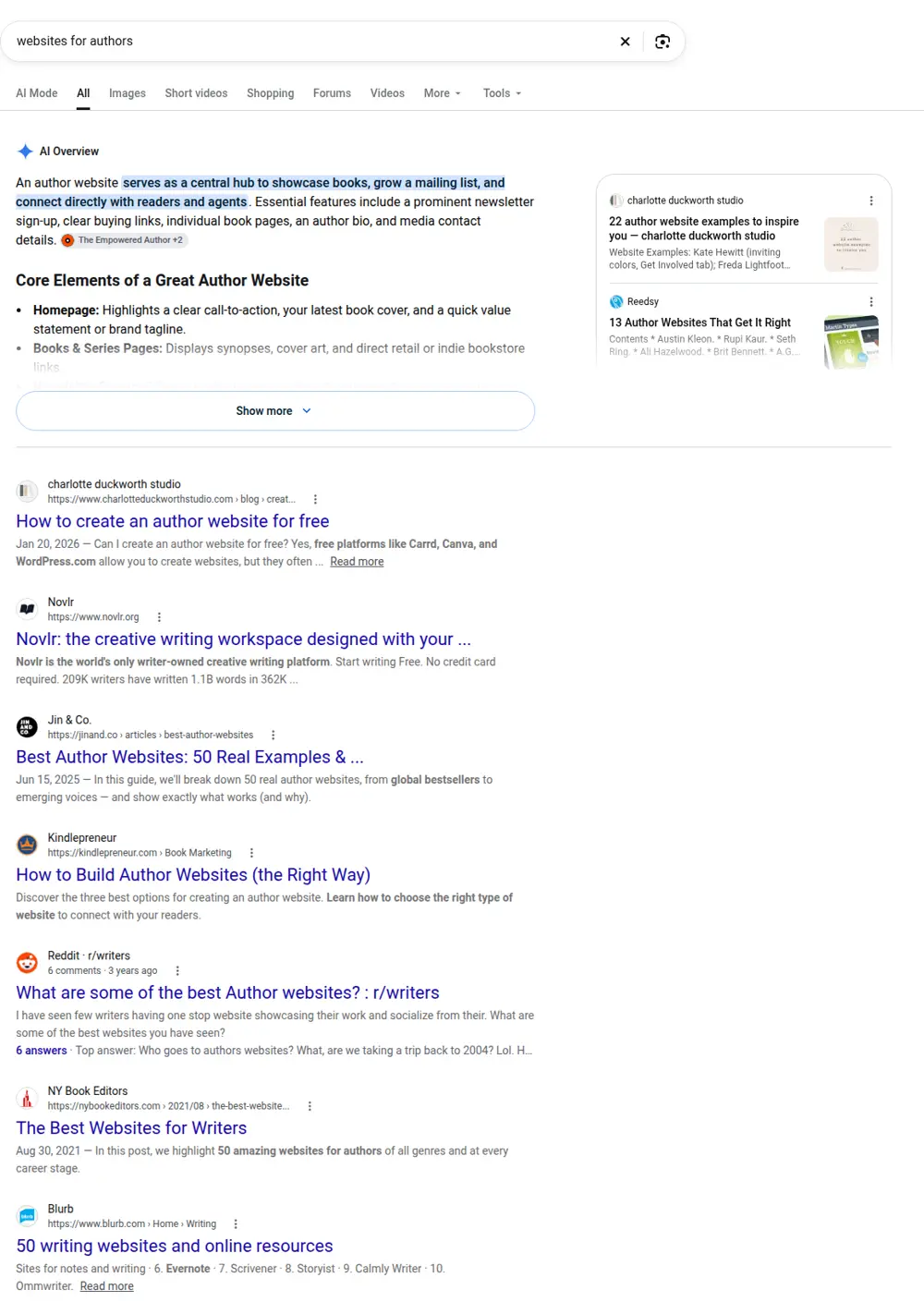
"Websites for authors" and "author website" get about 2,400 searches a month, per DataForSEO. "Author website design" gets about 170, and "author web design" about 70. (Many other searches containing "website" and "author" are students learning to cite a website with no author, which is a different audience entirely.)
Who visits an author website
Readers. They just finished a book and want the next one, or they heard you on a podcast and want to know where to start. They need the series order, the latest release and a buy button for their preferred store.
Agents and editors. If you're querying, an agent will often look you up. A clean website with your bio, your books or projects and your writing credits shows you take your career seriously.
Media and events. Podcast hosts, journalists, librarians, bookshops and festival organizers want a short bio, a long bio, headshots, topics you talk about and a contact email. If they can't find these in a minute, they move on.
Bookstores and schools. For children's and young adult authors, teachers and librarians look for school visit details and educator guides.
Pages an author website needs
Home page
The latest book front and center: cover, a one-line hook, a buy button and a signup. Below that, your other books, a short introduction to who you are and recent news.
A page for each book
This is where most visitors land from search and from links. Each book page should include:
- The cover, large and sharp
- The blurb or description
- Series name and number, with links to the previous and next books
- Release date and formats (hardcover, paperback, ebook, audiobook)
- Buy links for the main retailers, and your local independent bookshop if you have one
- A few short quotes from reviews or blurbs from other authors
- An excerpt or first chapter, if your publisher allows it
- Content notes, if relevant for your genre
Series pages
Readers who discover a series in the middle need to know where to start. A series page with every book in order, short descriptions and a reading order for spin-offs or novellas saves them a search and saves you emails.
About
A friendly bio in the first person for readers, plus a link to the media kit. A photo that looks like you today.
Email list
The most valuable part of an author website. Social reach goes up and down; your list stays. Give readers a reason to sign up: a bonus chapter, a short story, early cover reveals or advance reading copies. Put the signup on every book page and at the end of every post.
Events and appearances
Upcoming readings, signings, festivals and virtual events, with dates, places and ticket links. Move past events to an archive so the page never looks empty.
Media kit
Short and long bios, high-resolution headshots and covers, a list of topics you speak about, past interviews and a contact for your publicist or agent. Make the files easy to download.
Contact
Separate contacts if you have them: rights and agency, publicity, events and readers. If you prefer not to share an email, a simple form works.
Author website design that fits your genre
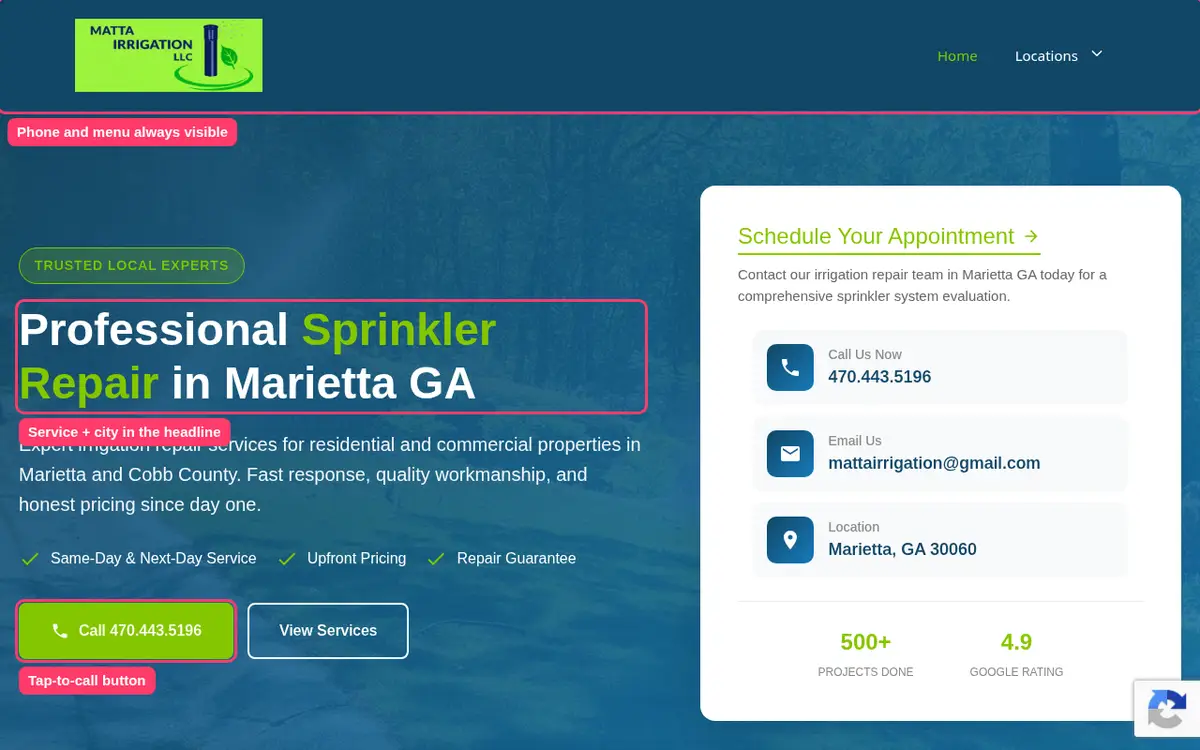
Readers judge books by their covers, and they judge author websites the same way. A thriller writer's site should feel different from a cozy mystery author's or a picture book illustrator's. Good author website design borrows from your covers, colors and type so the site feels like part of the same world. The goal isn't decoration. It's helping readers recognize you instantly when they come from a book, an ad or a podcast.
At the same time, the structure stays simple. Fancy animations or heavy video backgrounds slow the site down and distract from the books.
Selling books from your website
Most authors don't need a full store. Buy links to the major retailers cover most readers. If you want to sell signed copies, bundles or direct ebooks, a small shop or a link to a direct sales service works well. We set up the links so each store opens in a new tab and track which ones readers click, so you can see where your readers buy.
Self-published and traditionally published authors
Self-published authors usually need more from their website. It's often their main marketing channel, the home of their reader list and sometimes a direct sales store. Clear series pages, reader magnets and launch pages for each new book are essential.
Traditionally published authors often focus on credibility and media. The publisher handles a lot of the selling, but the website supports publicity, events and the long tail of readers who discover older titles. It also stays with you if you change publishers.
Nonfiction authors and experts
If you write nonfiction, your book is often part of a larger business: speaking, consulting, coaching or courses. Your website should connect them. A book page that leads to a speaking page, and a media kit with your expertise topics, turns readers into clients and event bookings. Our pages on websites for coaches and websites for consultants cover those businesses in more detail.
Children's book authors
Children's and young adult authors have a special audience: teachers, librarians and parents. Add a school visits page with what you offer, grade levels, fees or a "contact for rates" note and a booking form. Downloadable activity sheets and discussion guides are popular and get shared between educators.
Launching a new book
A book launch is the moment your website works hardest. A few weeks before release, we can help you:
- Add a page for the new book with a preorder button
- Put the cover and release date on the home page
- Add a countdown or launch event details
- Prepare a launch email for your list
After release, add reviews and update the page as the book finds readers.
Book clubs and reading guides
Book clubs choose books months ahead, and many search for reading guides when they decide. A downloadable guide for each book, with discussion questions, background on the setting and a short note from you, makes your books easier to pick. Some authors also offer short video calls with book clubs. If you do, add a simple request form with the club name, the book and preferred dates. This is one of the easiest ways to build loyal readers, and it costs nothing but time.
Audiobooks, translations and international readers
Readers find you in many formats and countries. If your books exist as audiobooks, add the narrator's name and a short sample on each book page. If there are translations, list them with the publisher and language, and link to stores in those countries where you can. International readers often struggle to find where to buy, and a short "buying outside the US" note saves them a search.
Being found by your book titles
People search for your name and your book titles more than anything else. Each book page should use the exact title and series name in its heading and page title, so Google shows your page next to the retailer listings. Readers who land on your site instead of a store page are more likely to join your list and buy the next book.
It also helps to answer the questions readers type into Google about your books: the reading order, whether a book is a standalone, when the next one comes out, whether there will be a sequel. A short FAQ on each series page covers these and often appears directly in search results.
What to write if you want a blog
You don't need a blog. Many successful authors don't have one. If you enjoy writing short posts, a few kinds work well:
- Behind-the-scenes notes on research or settings
- News about releases, covers and events
- Short essays connected to the themes of your books
- Recommendations of books you loved
Post when you have something to say, and send the best posts to your email list. A newsletter archive on the site can replace a blog entirely.
Working with your publisher and agent
If you're traditionally published, your publisher may have rules about covers, excerpts and review quotes, and your agent may want certain contacts listed. We check those before launch. Publicists often ask for a specific press page format, and we can match it. When a new edition or a paperback comes out, the book page is updated with the new cover and links, so readers never land on an out-of-print edition.
Privacy for authors
Some authors write under a pen name or prefer to keep their location private. That's easy to respect: we use a contact form instead of a public email, leave out personal details and register the domain with privacy protection. Your website can be completely professional without revealing where you live.
Common mistakes on author websites
- No buy links, or links that point to the wrong edition.
- Series books listed in random order.
- An email signup with no reason to join.
- An events page with events from three years ago.
- Headshots that are too small for print.
- A blog started with enthusiasm and abandoned after two posts.
Keeping it simple to update
Authors have books to write, not websites to manage. We set the site up so adding a book, a review quote or an event takes a few minutes, without breaking the design. If you'd rather not touch it, we can make updates for you.
Real Search Console data
This is from a service site we built. It shows how traffic grows over time as pages answer real searches. Book pages and series pages work the same way, collecting readers who search for titles and series names.
How we build your author website
You price it with the calculator first. Then you send us your covers, blurbs, buy links, bio and headshots, and tell us which reader magnet you'd like to offer. We plan the pages around your books and series, write the supporting text, design the site to match your genre and set up the email signup with your mailing service. You review a draft and we launch when you're happy.
Price
The base is $299, with $15 for every extra page, never more than $630. An author with six books, one series page, events and a media kit has nine extra pages, which comes to $434. Each new book later adds one page.