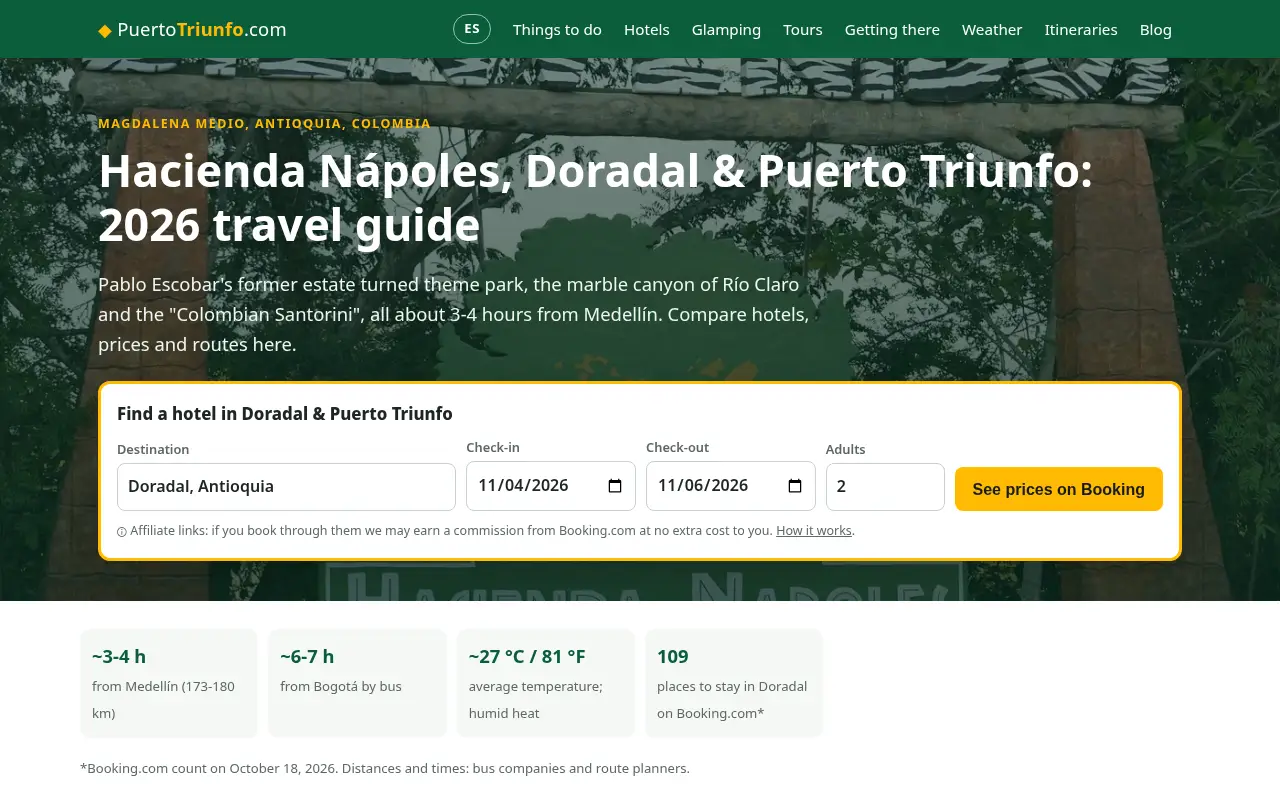
What a startup website needs to do
A startup website has a harder job than most. You're often explaining something new to people who didn't know they needed it. Visitors come from a launch post, a pitch, an investor intro or a friend's recommendation, and they decide in seconds whether to keep reading.
At the earliest stage, the website has one goal: get the right people to take the next step. That might be joining a waitlist, starting a free trial, booking a demo or getting in touch. Everything else is secondary.
| What people type into Google | US searches per month |
|---|---|
| startup website design | 170 |
| startup website | 720 |
| startup business website | 590 |
| best startup website | 140 |
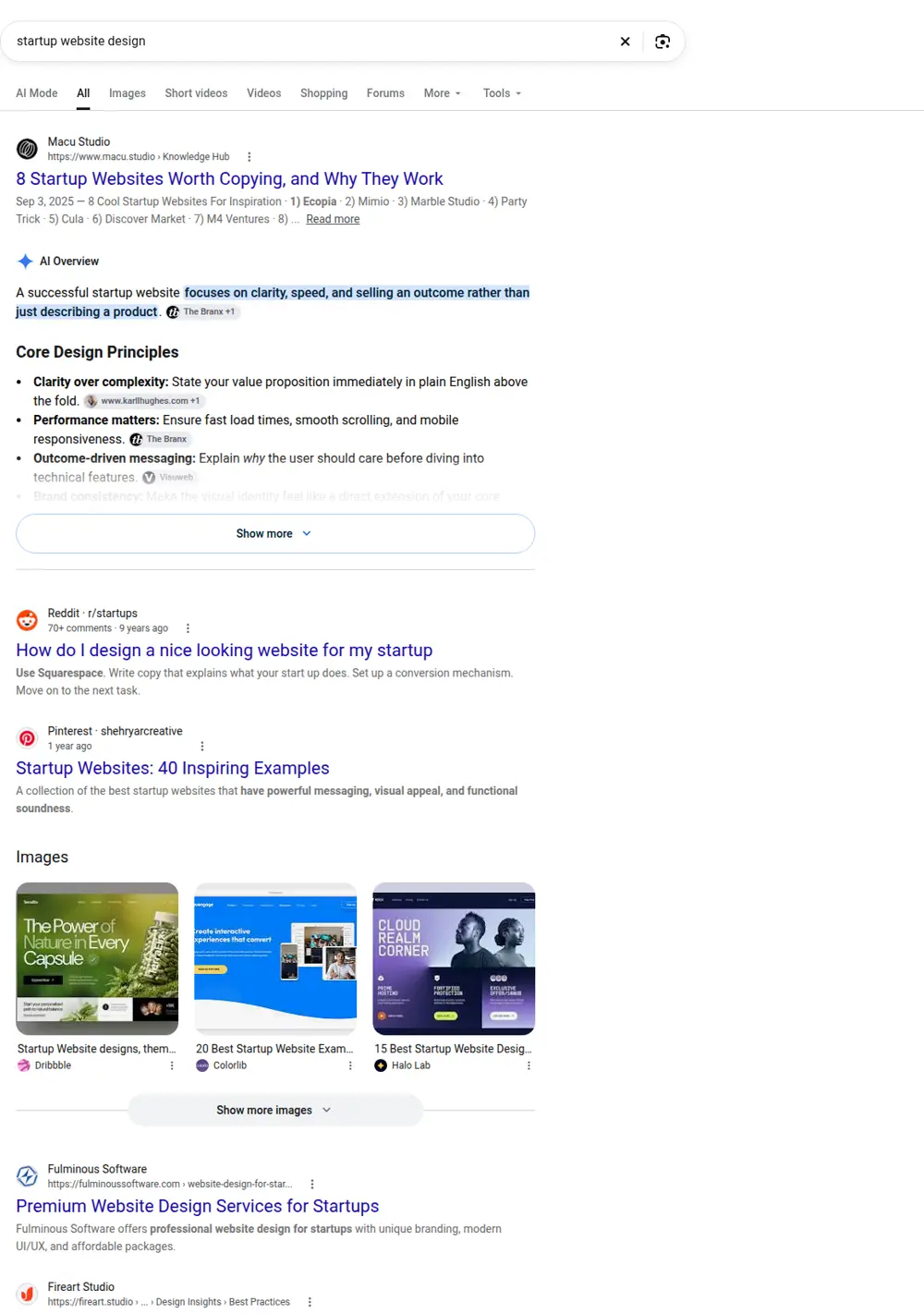
"Startup website" gets about 720 searches a month, and "startup business website" about 590. "Startup website design" and "startup company website design" get about 170 each, and "best startup website" about 140, per DataForSEO. Many founders search for examples before building, which is a good habit: the best startup websites share a few clear patterns.
The value proposition comes first
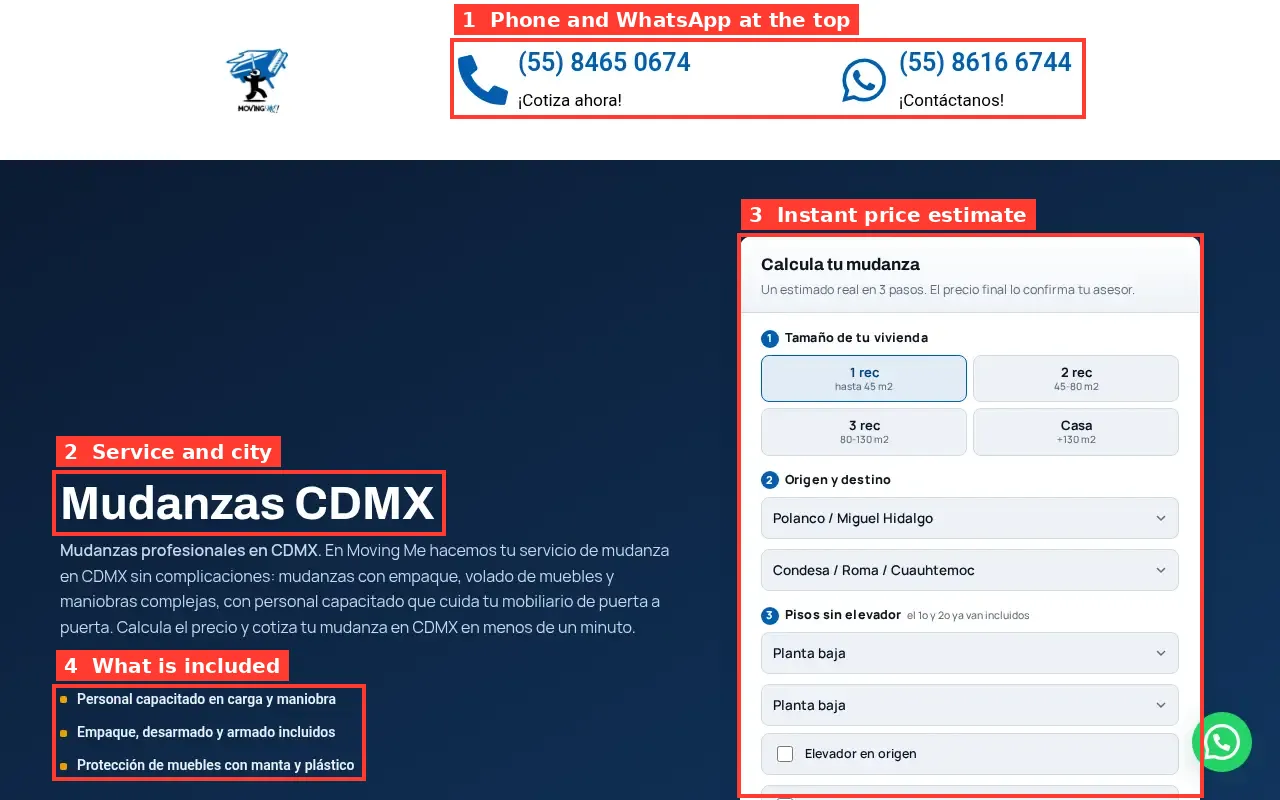
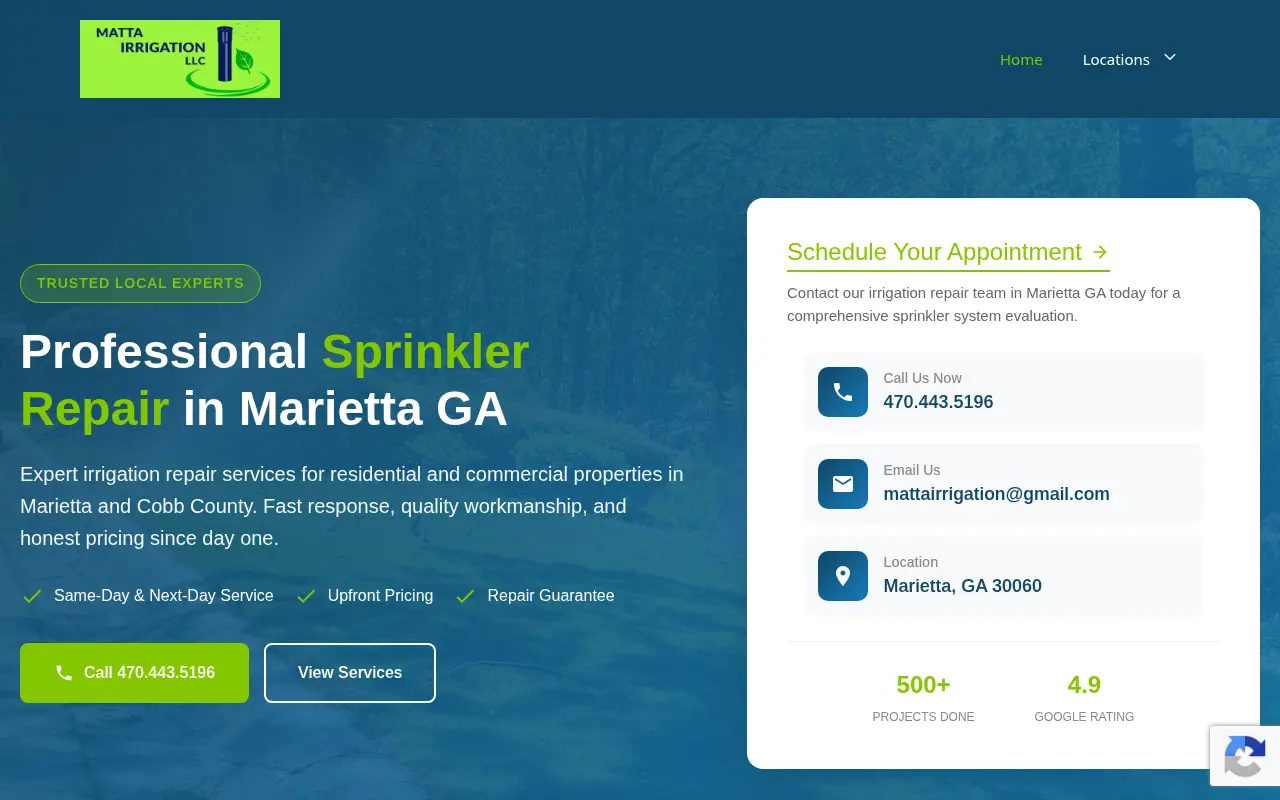
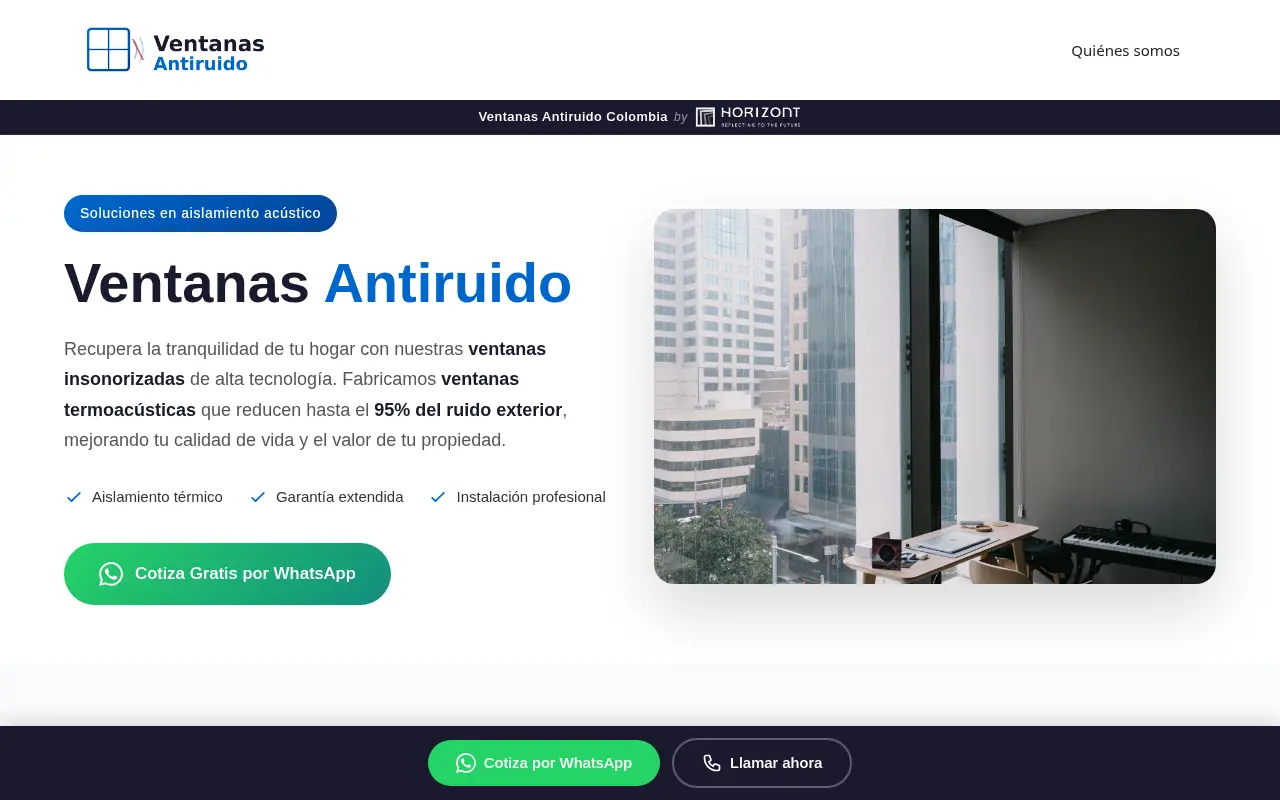
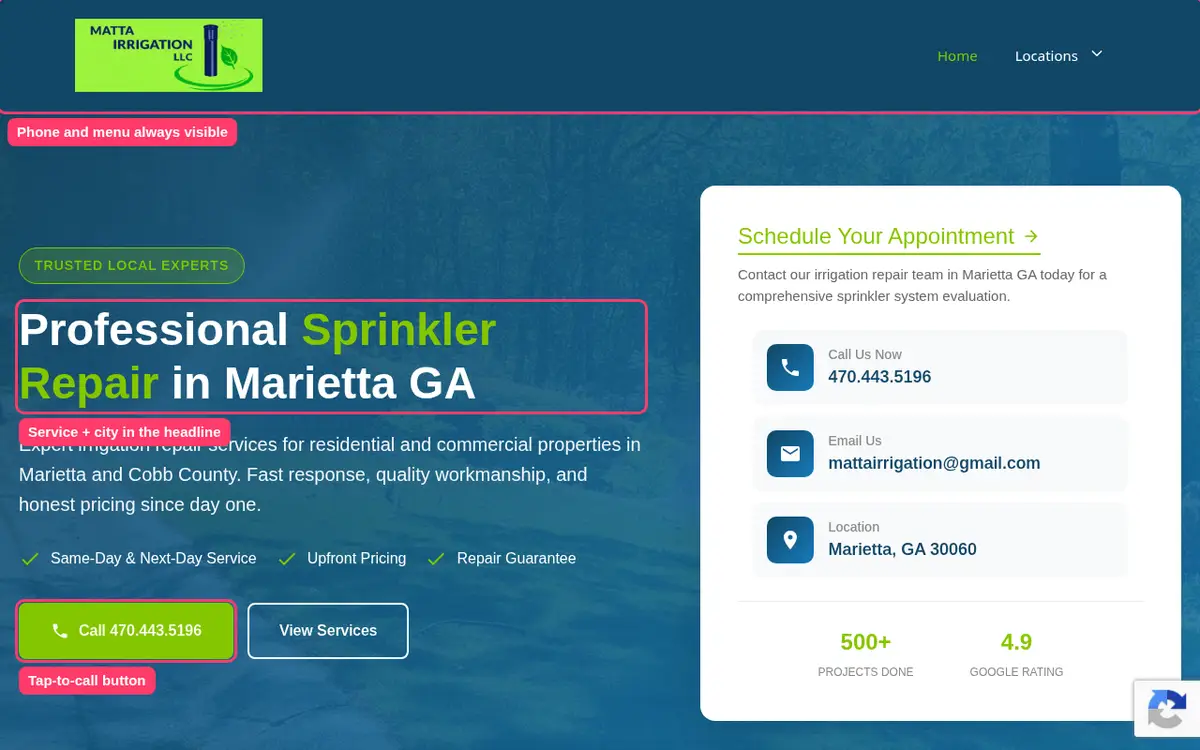
The single most important line on a startup website is the headline. It should say what the product does, who it's for and why it's better, in plain words. "The AI-powered platform for the future of work" says nothing. "Turn customer calls into CRM notes automatically" tells a sales manager immediately whether it's for them.
Below the headline, one or two sentences explain how it works, then a single clear call to action. Then proof: a screenshot or short demo, logos of early customers or pilot partners, a quote from a user.
We spend more time on this part than on any other, because if the headline doesn't land, the rest of the site doesn't get read.
Pages a startup website needs
Home page
Headline, explanation, call to action, product visual, proof, key features with benefits, a short "how it works" and a final call to action. For many startups at the seed stage, this is most of the website.
Product or features
A deeper look at what the product does, organized around the problems it solves rather than a list of features. Screenshots, short videos or interactive demos help people understand.
Use cases or solutions
If different types of customers use the product differently, a page for each one. A scheduling tool might have pages for clinics, salons and consultants. Each page speaks the language of that audience.
Pricing
When you're ready, a clear pricing page with plans, what's included and a free trial or starting plan. If pricing isn't public yet, say how to get a quote or join the beta.
About
The founders, the story behind the product and the team, with real photos. Early customers and investors are betting on the team, so this page matters more than at a big company.
Waitlist or signup
For pre-launch startups, a short waitlist form with an email field, and maybe one question to segment early users. Tell people what happens next.
Blog or resources
Optional at the start. A few useful posts on the problem you solve can bring in search traffic and give you something to share. Don't start a blog you won't keep up.
Legal
Privacy policy and terms of service, especially if you collect data or take payments. You or your lawyer provide the text, and we put it in place.
Startup website design by stage
Pre-launch and idea stage
A single landing page with the value proposition, a short explanation, a waitlist form and a way to contact the founders. The goal is to test the message and collect interest. You can launch this in days.
Seed stage
A small site with a home page, product, about and pricing or demo request. Early customer logos and quotes start to appear. The site needs to look credible to customers and investors.
Growth stage
More pages: use cases, integrations, case studies, comparison pages, careers. The site becomes a real marketing channel, and search starts to matter. At this point, many startups move to a larger site or a dedicated team, and the earlier structure makes that easier.
What the best startup websites have in common
When founders look at the best startup website examples, they often notice design first. But the patterns that matter are about clarity:
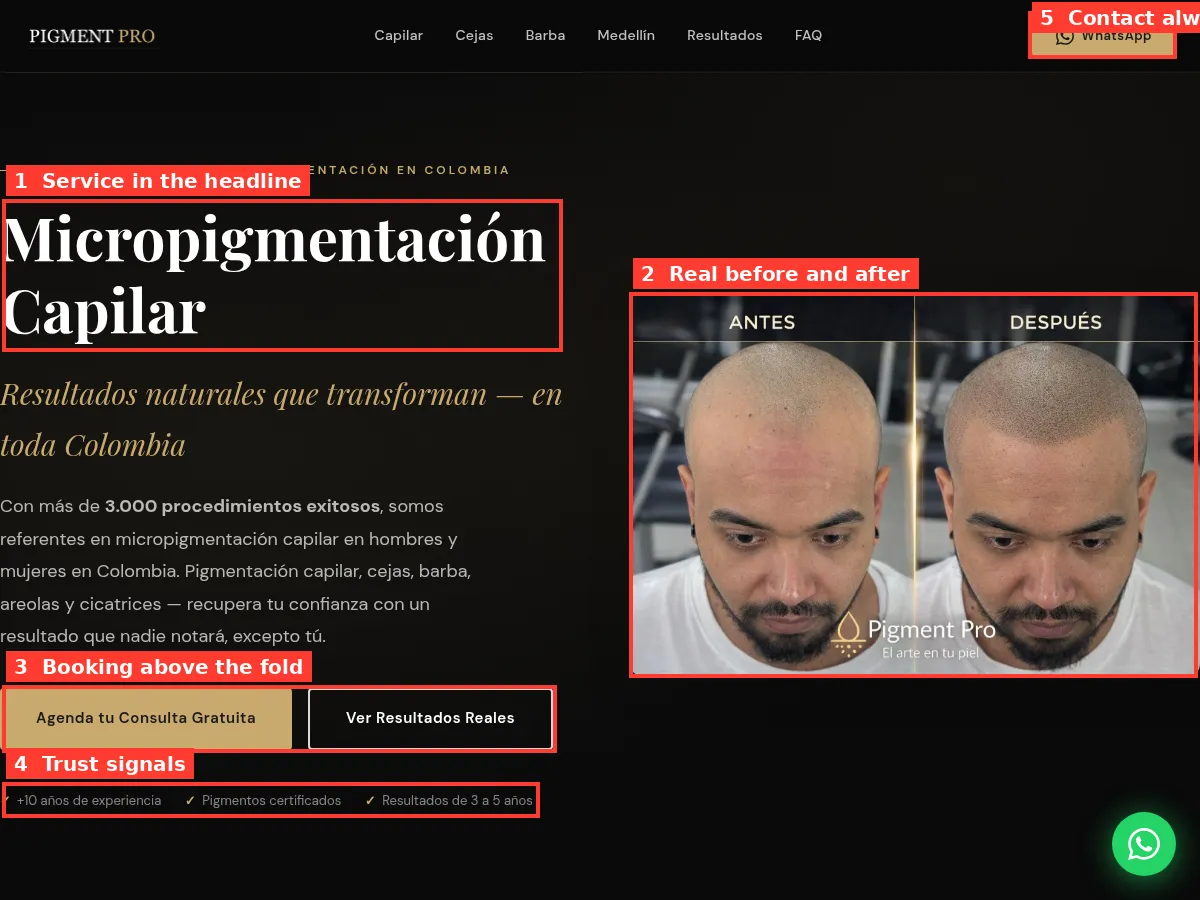
- The headline says what the product does in plain words.
- There's one main call to action, repeated.
- The product is shown, not just described.
- Proof appears early: logos, numbers, quotes.
- Pages are short and fast.
- The tone sounds like real people.
Good design supports these things. It doesn't replace them.
Startup website templates and builders
A startup website template or builder can get a landing page up in an afternoon, and for a first test that's fine. Templates often push you toward generic sections and stock illustrations, though, and many look identical across hundreds of startups. When the message is clear and you have early traction, a site built around your product and customers helps you stand out to users and investors.
B2B and B2C startups
B2B startups sell to companies, often with longer sales cycles. Their sites need clear use cases, security and compliance information, integrations, case studies and a demo request. Buyers may need to share the site with colleagues, so clarity and detail matter.
B2C startups sell to people directly. Their sites need emotional clarity, quick signup or download buttons, app store badges, social proof and very fast mobile pages.
Marketplaces need to speak to both sides, for example buyers and sellers, with separate paths for each.
Startups and investors
Investors look at your website before and after a pitch. They want to see a clear product, a real team, signs of traction and a professional presentation. A website doesn't win funding by itself, but a confusing or outdated one raises doubts. Keep the home page message consistent with your pitch deck, show your team and update traction as it grows. You don't need an investor relations page at the early stage.
Speed, SEO and analytics from day one
Startups often add tracking scripts, chat widgets and heavy animations that make the site slow. We keep it light and fast, set up basic SEO correctly (titles, descriptions, structured data, a sitemap) and connect Google Search Console and simple analytics. That way you see what people search for and which pages convert from the first week.
Launch day checklist
Whether you launch on a community site, in a newsletter or with a press announcement, the website gets a burst of traffic it may never see again. Before launch day:
- Check every page and form on a phone and a slow connection.
- Make sure the signup or waitlist works and sends a confirmation.
- Add a short launch note or banner with an offer for early users.
- Prepare a page for press with logos, screenshots and founder photos.
- Set up Search Console and analytics so you can see where visitors come from.
- Have someone ready to answer the contact form and chat that day.
After launch, look at which sources sent people who actually signed up. That tells you where to spend your next weeks.
Comparison and alternative pages
Once you have competitors, people will search for comparisons, like your product versus an established tool, or "alternatives to" a known product. Honest comparison pages that explain who each option is best for, with a clear table, attract buyers who are already shopping. Keep them fair and current. Exaggerated comparisons damage trust quickly, and visitors usually check.
Integrations and security pages
B2B buyers often ask two questions early: does it work with the tools we use, and is it secure? An integrations page with logos and short descriptions of each connection answers the first. A security page explaining hosting, encryption, access controls, data retention and any certifications or audits in progress answers the second. Even if you're early, being clear about what you do and what's coming builds confidence with larger customers.
Careers pages for small teams
Early hires take a big risk joining a startup, and they read the website closely. A simple careers page with the mission, the team, how you work (remote, hybrid, office), benefits and open roles helps attract people who fit. A few honest lines about the stage you're at, and what's hard about it, attract candidates who are ready for that.
Founder-led content
At the early stage, the founders are the best marketers. Short posts or videos in which a founder explains the problem, shares what customers say or shows how the product is built connect with early users in a way company announcements don't. Publish them on the site and share them on LinkedIn or X. Over time, these posts become a record of how the company thinks, which helps with hiring and investors too.
Onboarding starts on the website
For self-serve products, the signup flow is part of the website experience. Keep the first step short, often just an email or a sign-in with Google. After signup, the welcome screen and first email should tell users the one thing to do first. If people sign up and never come back, the website may be attracting the wrong audience or promising something the product doesn't deliver yet. Look at both.
Choosing a domain and name
Founders often launch with a temporary name or a long domain. That's fine for testing, but before you invest in content and links, settle on a domain you'll keep. Short, easy to spell and easy to say out loud matters more than the ending. Moving later is possible, but redirects and lost links cost time and traffic.
Social proof when you're new
Early startups rarely have famous logos. You can still show proof: quotes from beta users with their role, the number of people on the waitlist, a pilot customer's result, an accelerator or grant, or a short video of a real user. Specific and honest proof beats a row of logos of companies that only tried the product once.
Pricing pages that help people decide
When a startup publishes pricing, the page often becomes one of the most visited on the site. Keep it simple: two or three plans, the main differences in a short table, a clear recommended plan and answers to common questions like billing, cancellation and data export. If you offer a free plan or trial, say what happens when it ends. Founders often underestimate how much a clear pricing page reduces support emails and speeds up signups.
Common mistakes on startup websites
- A headline full of buzzwords that doesn't say what the product does.
- Five different calls to action on the home page.
- No product screenshots or demo.
- A team page with no names or photos.
- Pricing that says "contact us" when the product is self-serve.
- A blog with one post from launch day.
- Heavy animations that slow the site down.
Iterating on your message
Startups change their positioning often, especially in the first year. The website should make that easy. We build pages so you can change the headline, swap screenshots, add a use case or update pricing without redesigning. Many founders test two or three versions of the headline in the first months, using signups as the measure.
Real Search Console data
This is from a business site we built. It shows how traffic grows after launch as pages start to rank. Startups see the same pattern when they add use case and problem-focused pages over time.
How we build your startup website
Clarify. We start with a short call or questionnaire about your product, customers and stage, and draft the headline and page plan with you.
Write. We write the copy in plain language, using your notes, pitch deck and customer conversations.
Design and build. We design a fast, modern site around your product visuals, set up your waitlist, signup or demo form and connect analytics.
Launch and iterate. You review the draft, we launch and you can update the message as you learn.
Price
$299 gets the base site, each extra page is $15 and nothing goes above $630. A seed-stage startup with product, three use cases, pricing, about and a waitlist page adds seven pages: $299 + $105 = $404. A pre-launch landing page can stay at the base price.