Websites for Ohio businesses
Ohio has nearly twelve million people, and unlike many states it doesn't have one city that dominates. Columbus, Cleveland and Cincinnati each anchor a metro of two million or more, and Toledo, Akron, Dayton, Canton and Youngstown are large markets of their own. Between them sit hundreds of small towns, suburbs and townships, plus farm country and Amish communities in the middle of the state.
For a local business, that means customers search for their city, their suburb or their township, almost never "Ohio". The site that wins is the one that names the places you really work. Our guide to web design in Columbus, Ohio covers the capital and its suburbs in detail. This page covers the rest of the state and businesses that work in several metros.
Where Ohio searches for web design
We pulled monthly Google searches for "web design" plus Ohio's main cities.
Cincinnati leads at 590 searches a month, ahead of Columbus at 480. Toledo is third at 210, then Cleveland at 140 and Akron and Dayton at 110 each. Canton shows 70 and Youngstown 20. Cleveland is a large metro, but its search number is lower than you might expect, likely because owners there search by suburb or by "northeast ohio".
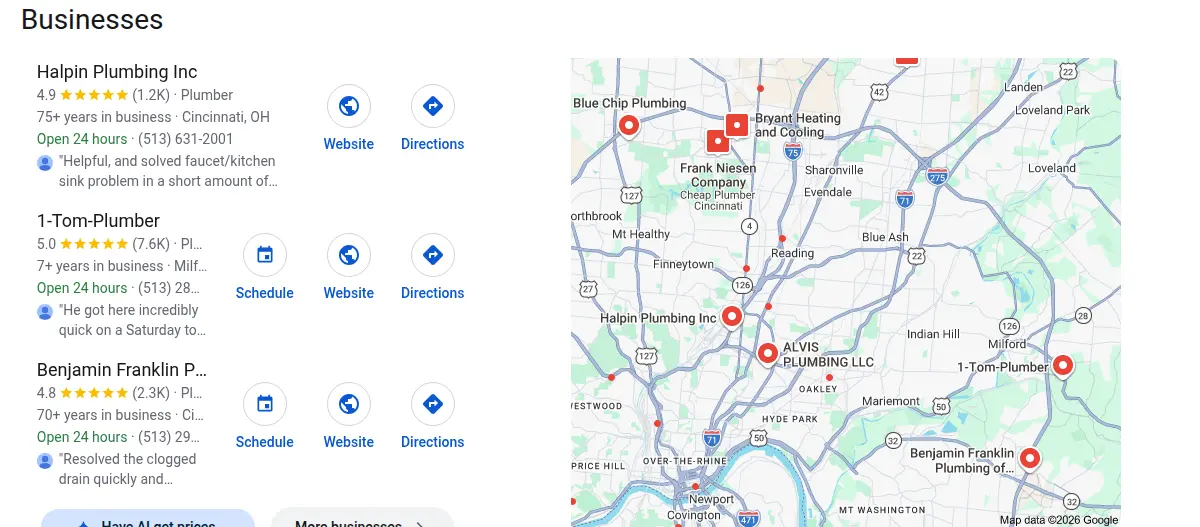
That's the Google map for plumbers in Cincinnati. Plumbing is a classic local search: people want someone close, available and well reviewed, and Google shows three of them before anything else.
| What people type into Google | US searches per month |
|---|---|
| web design in ohio | 110 |
| ohio web design company | 20 |
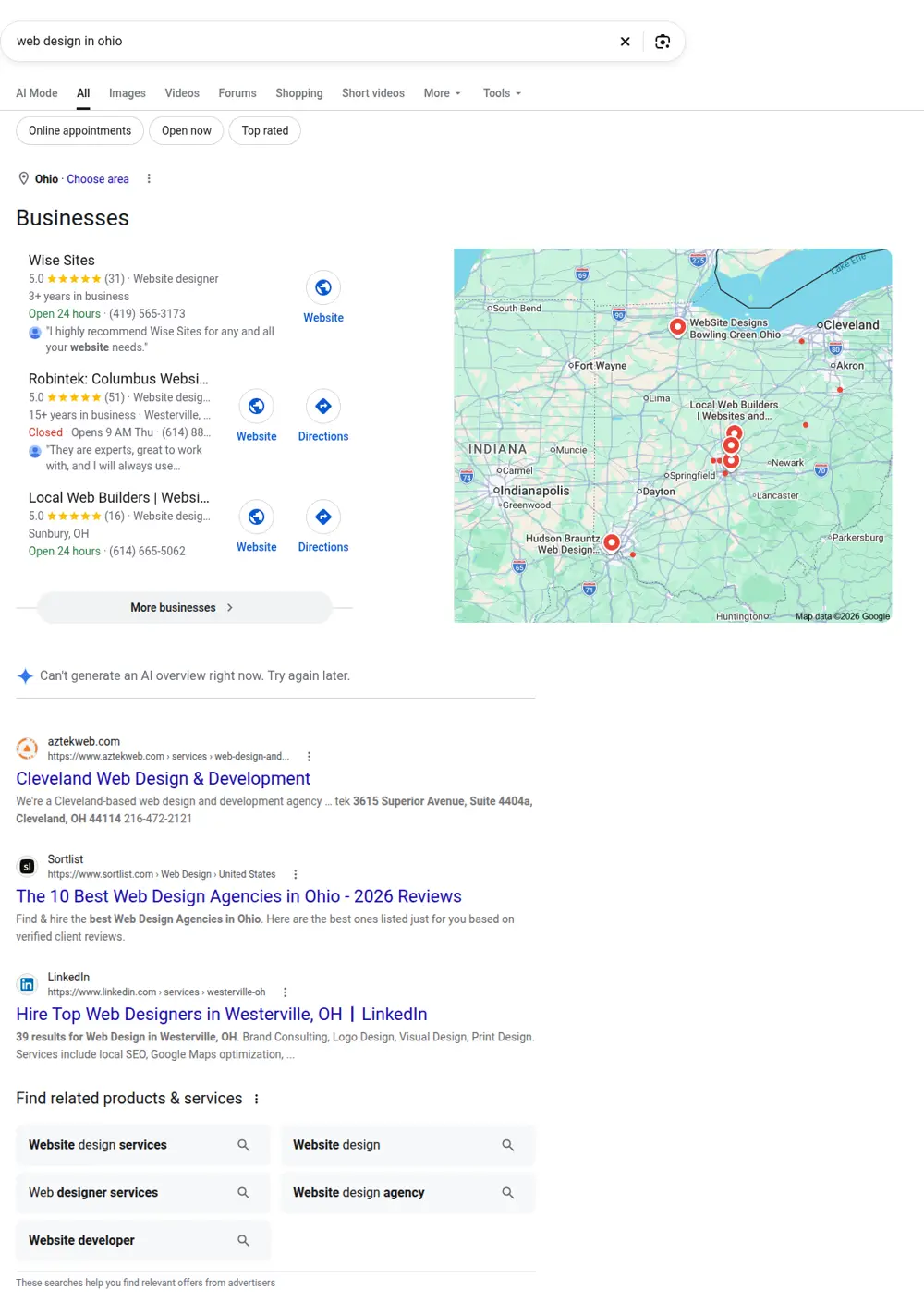
Statewide phrases are small. "Web design in ohio", "web design ohio" and "web design oh" sit at 110 a month as a group, and "ohio web design company" adds about 20. Per DataForSEO, "web design company in ohio" also reaches about 110, and "web design companies in ohio" about 20. Most real demand is city by city.
Ohio's metros and how they differ
Cincinnati and Southwest Ohio
Cincinnati sits on the Ohio River across from Northern Kentucky, and many businesses work on both sides. Covington, Newport, Florence and Fort Thomas are in Kentucky but part of the same metro. A Cincinnati plumber or electrician who crosses the river should have pages for those cities too, with the right Kentucky license shown. Suburbs like Mason, West Chester, Blue Ash, Fairfield and Loveland are searched separately and often have newer homes. The older neighborhoods closer to downtown, like Hyde Park, Clifton and Northside, have century-old houses with very different needs.
Cleveland and Northeast Ohio
Cleveland's market spreads through Cuyahoga County and beyond: Lakewood, Parma, Westlake, Strongsville, Solon, Mentor and the Heights. East of the city is the snow belt, where lake-effect storms off Lake Erie can drop heavy snow in Geauga and Ashtabula counties while downtown stays clear. Snow removal, roofing, gutters and furnace work peak here. Akron and Canton, to the south, are their own markets with strong local identities.
Toledo and Northwest Ohio
Toledo sits on the Michigan border, and many businesses serve Monroe and Bedford Township in Michigan as well as Perrysburg, Sylvania, Maumee and Bowling Green in Ohio. Toledo's 210 searches a month are high for its size, which suggests many owners there are looking for a better site.
Dayton and the Miami Valley
Dayton, Kettering, Beavercreek, Centerville, Huber Heights and Springfield. Wright-Patterson Air Force Base brings a large military and civilian workforce, with families who move often and search for movers, cleaners, home inspectors and contractors without local referrals.
Small towns and Amish country
Holmes, Wayne and Tuscarawas counties have one of the largest Amish communities in the world. Builders, furniture makers, cabinet shops and tourism businesses there often sell to customers across the country. A website for these businesses should explain the craft, show real work and make it easy for out-of-state buyers to ask for a quote.
Licensing in Ohio
Ohio is a state where licensing depends on the work. The Ohio Construction Industry Licensing Board licenses commercial contractors in five trades: electrical, HVAC, plumbing, hydronics and refrigeration. Residential contractors are usually licensed or registered by the city or county where they work, and the rules vary. Columbus, Cleveland, Cincinnati, Dayton and many suburbs have their own registration.
That patchwork confuses customers, so the site should be clear. We list each license or registration you hold, with the city, county or board that issued it, in the footer and on the about page. If you work across the river in Kentucky or across the line in Michigan, we show those licenses on the pages for those cities.
What Ohio customers search for, by season
- Winter: furnace repair, boiler service, snow removal, frozen pipes and ice dams, especially in the snow belt.
- Spring: basement waterproofing, sump pumps, roof repair after storms and lawn care.
- Summer: AC repair, decks, concrete, painting, landscaping and pest control.
- Fall: gutter cleaning, furnace tune-ups and roof checks before winter.
Ohio also sees severe thunderstorms and occasional tornadoes in spring and summer, which bring roofing, siding, tree removal and restoration calls. A storm damage page that explains your process honestly, including how you work with insurance, should be live before the season.
Trades that do well online in Ohio
Across Ohio, the trades with the most to gain from a good site are the ones customers search for when something breaks or when they're planning a big project.
HVAC. Long winters and humid summers mean furnace and AC work all year. Heat pump installs are growing, and customers search for rebates from AEP Ohio, Duke Energy Ohio and other utilities. A page that explains which programs apply helps.
Plumbing and drains. Older homes in Cleveland, Akron, Toledo and Cincinnati have clay sewer lines, cast iron drains and old water heaters. Sewer line replacement and camera inspections are good page topics.
Roofing, siding and gutters. Spring storms and hail bring steady roofing searches, especially in Southwest and Central Ohio. Customers want local photos, warranty details and a clear explanation of how insurance claims work.
Basement waterproofing. Wet basements are common in Northeast Ohio, and the work is expensive, so customers read several sites before they call.
Concrete and masonry. Freeze-thaw cycles crack driveways, steps and foundations, and repair searches climb every spring.
Landscaping and snow removal. Many companies do both. The site should change its focus with the season.
Reaching customers in small towns
Outside the big metros, Ohio has many towns of 5,000 to 30,000 people, like Wooster, Mansfield, Findlay, Lima, Marion, Zanesville, Chillicothe and Athens. Competition online is often weak, and a business with a clear page for the town and a few good reviews can show up quickly. These customers also rely on word of mouth, so a site that backs up a recommendation, with photos, reviews and a phone number, does a lot of work.
Ohio's manufacturing and logistics base
Ohio has one of the largest manufacturing workforces in the country, with steel, auto parts, polymers, food and equipment makers spread from Toledo to Cincinnati. Columbus and the I-70 and I-71 corridors are major logistics hubs. Small suppliers, machine shops, trucking companies and warehouses often have weak or outdated sites, and their buyers search for capabilities, certifications and service areas before they call. A page for each capability, a clear list of equipment and certifications and a quote form usually do more than a long company history. See websites for manufacturers and websites for trucking companies for more.
Photos and proof for Ohio customers
Ohio customers tend to trust businesses that look local and established. Show real photos of your team, your trucks and finished jobs, with the town noted: "new furnace in Beavercreek" or "basement waterproofing in Parma". Add your years in business, any Better Business Bureau accreditation you hold, manufacturer certifications and two or three reviews on every service page. For family businesses, a short story about who runs the company and how long you've served the area goes a long way. Keep images compressed so the pages stay fast on phones, especially for customers in rural counties.
Keeping the site current through the year
Plan a few small updates each year. Before fall, refresh furnace, gutter and snow removal pages. In late winter, update roofing, basement and storm pages. In spring, highlight AC tune-ups, decks, concrete and lawn care. Add new project photos and recent reviews each time. These updates take an hour or two, keep the site matched to what customers are searching for and give Google a reason to recrawl your pages. A site that looks active also tells customers you're still in business, which matters more than many owners think.
What an Ohio site should show first
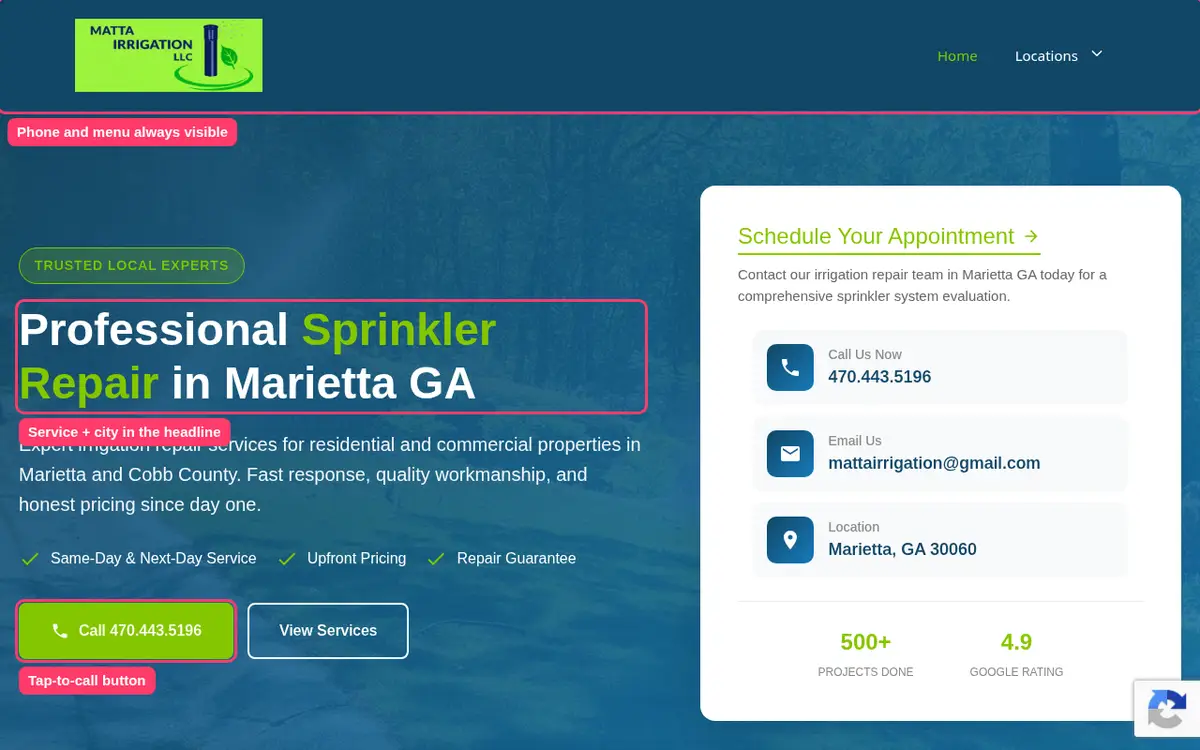
- The service and the city in the headline, like "Furnace repair in Westlake"
- A tap-to-call button and a short quote form
- Your Google rating and a recent review from a nearby customer
- The license or registration for each city you work in
- Links to the suburbs and towns you serve
Pages we usually plan for Ohio businesses
| Page | When it's worth it |
|---|---|
| Home | Always, naming your main city and service |
| Service pages | One for each service you want to rank for |
| Suburb and town pages | For each place with real searches where you work |
| Cross-border pages | Northern Kentucky, Michigan or West Virginia, if you work there |
| Storm or winter page | For roofing, gutters, heating and plumbing |
| About | Licenses, insurance and team |
Suburb pages done right
A suburb page should be written for the customers in that suburb. For a Cincinnati roofer, a Mason page might mention newer subdivisions and HOA rules on shingle colors, while a Hyde Park page talks about slate roofs and older homes. For a Cleveland plumber, a Lakewood page might mention the dense, older housing near the lake and a Solon page the larger, newer homes. Each should have a review from that area and a few photos of local jobs. A copy of the same text with a new town name rarely ranks and rarely convinces anyone.
Real data from one of our sites
We track this client site, which we built, in Search Console. It's not in Ohio and we don't share its name, but it shows the usual pattern of a quiet start followed by steady month-over-month growth.
Mistakes we see on Ohio small business sites
- "Serving Northeast Ohio." Customers search Parma, Mentor and Strongsville by name.
- No license or registration shown. Ohio's rules vary by city, and careful customers check.
- Ignoring the other side of the river. Northern Kentucky is part of the Cincinnati market.
- Snow belt pages that go up in January. Have them live by fall.
- A stock photo of a downtown skyline. Real photos of your crew and local jobs convert better.
How we work
- See your price in the website price calculator for your trade and city.
- Give us your service area, suburb by suburb, plus Kentucky, Michigan or West Virginia towns if they apply.
- We write it all, with your license or registration for each place and photos from real jobs.
- You go through the draft and tell us what to change.
- Launch day: the site goes live and your Google Business Profile is updated to match.
Price
$299 base, $15 for each extra page, never more than $630. A Cincinnati electrician with five services and pages for Mason, West Chester, Blue Ash and Covington pays $299 plus 8 × $15, or $419. A Toledo roofer with four services, a storm page and five town pages pays $299 plus 9 × $15, or $434. For trade advice, see websites for electricians, websites for roofers or websites for home builders. For general pricing, see how much a website costs.
How to compare an Ohio web design company
Before you hire an Ohio web design company, ask how they choose your pages, whether the price is fixed, who owns the domain, who writes the content and how quickly the site loads on a phone. Many directories rank web design companies in Ohio by size or by ads they pay for, which tells you little about whether they'll do good work for a small local business. Look at real sites they built for businesses like yours, and call one of their clients if you can.