The short answer
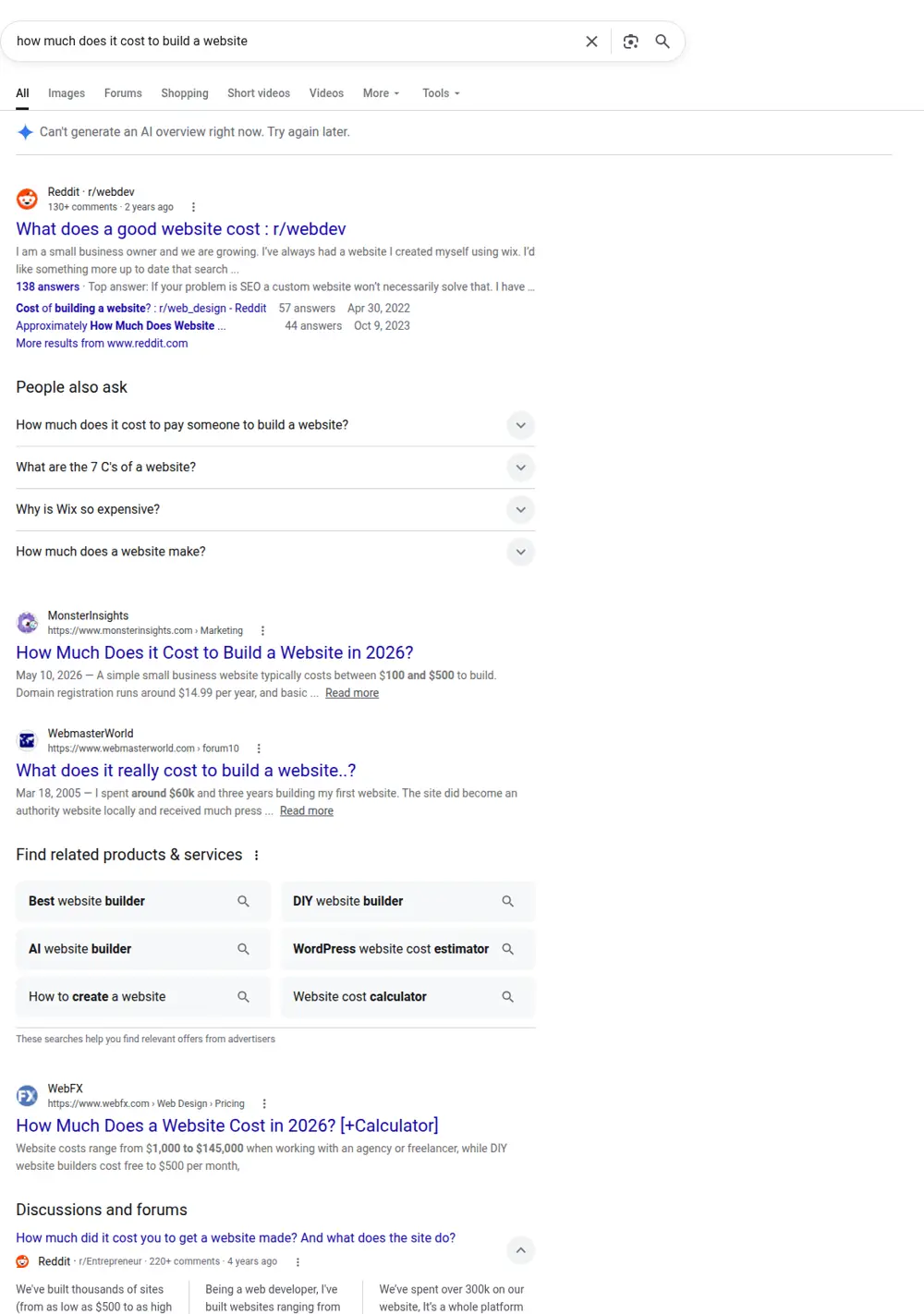
Building a small business website usually costs between $300 and $5,000 upfront, and between $100 and $500 a year to keep online. A simple site you build yourself on a website builder can cost almost nothing upfront and $200 to $600 a year in plan fees. A custom site from an agency often starts around $5,000 and can pass $30,000 for large projects.
Where you land depends on four things: who builds it, how many pages it has, what it needs to do, and how much of the writing and SEO work is included. The rest of this guide goes through each one with real price ranges, so you can tell whether a quote is fair.
These are typical US ranges at the time of writing. Builder and hosting prices change often, so check the current plan pages before you sign up for anything.
Website cost by who builds it
| Who builds it | Upfront cost | Yearly cost | Your time |
|---|---|---|---|
| You, on a website builder | $0 to $200 | $200 to $600 | 20 to 60 hours |
| You, on WordPress | $0 to $300 | $100 to $500 | 30 to 80 hours |
| Freelancer | $1,000 to $5,000 | $100 to $1,500 | 5 to 15 hours |
| Small studio like SiteCostly | $299 to $630 | $100 to $500 | 2 to 5 hours |
| Agency | $5,000 to $30,000 or more | $1,000 to $10,000 or more | 10 to 40 hours |
Building it yourself
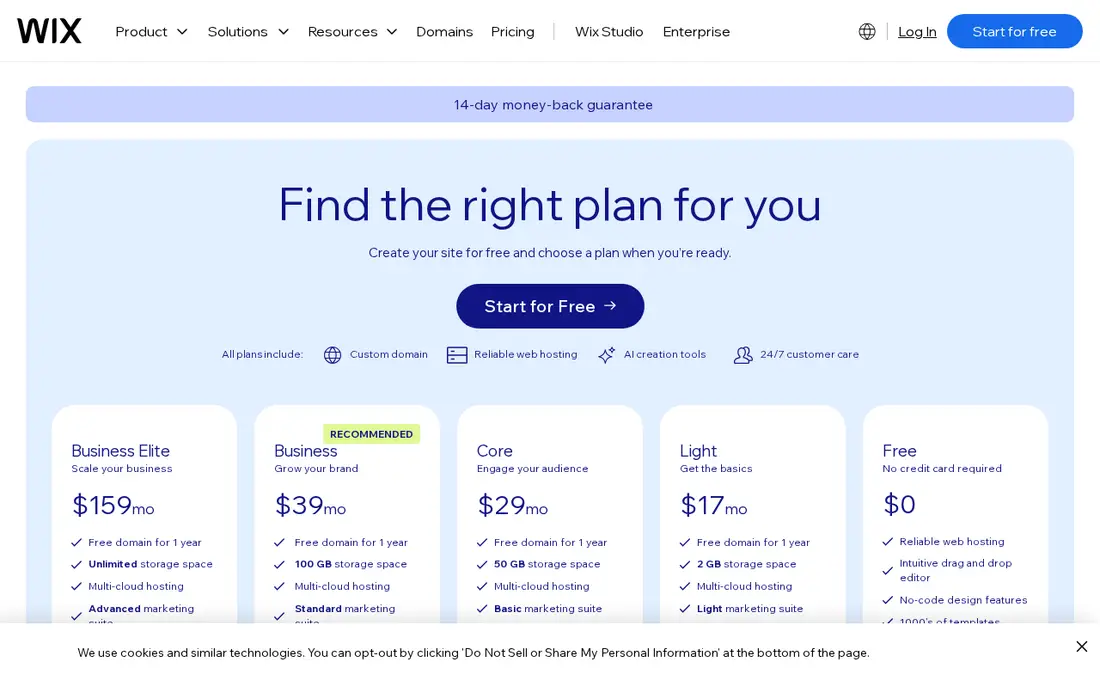
Website builders like Wix and GoDaddy let you pick a template, drag in your text and photos and publish. The upfront cost is close to zero. You pay a monthly plan instead, usually somewhere between about $16 and $50 a month for a small business plan, and more for online stores.
The real cost is your time. Planning the pages, writing the copy, finding photos and setting up the basic SEO takes most people several weekends. If your hour is worth $50 and the site takes 40 hours, that "free" website cost you $2,000 in time.
DIY works well for hobby sites, portfolios and businesses that mostly get customers by referral. It works less well when you need to show up on Google against competitors who paid for a properly planned site.
Hiring a freelancer
A freelance web designer typically charges $1,000 to $5,000 for a small business site, sometimes more in big cities. You get a custom design and someone to handle the technical setup. Quality varies a lot, so look at sites they have built and ask whether copywriting and SEO are included. Often they are not, and you end up writing everything yourself.
Working with an agency
Agencies bring a team: a strategist, a designer, a developer, a copywriter and an SEO specialist. That costs more, often $5,000 to $30,000 for the build and a monthly retainer after. For a large company with complex needs, it can be worth it. For a plumber, dentist or salon with ten pages, it usually means paying for meetings and process you don't need.
A small studio with a fixed price
Studios that focus on one kind of client, like ours (see websites we've built), can charge less because the planning repeats from project to project. We only build websites for local service businesses, so we price from your market: the calculator checks real Google searches for your trade in your city, plans one page per group of searches and gives you a fixed price from $299 to $630.
Plus $200 to $600 a year in builder fees and 20 to 60 hours of your time.
Custom design. Copy and SEO are often extra.
Fixed price from your local searches. Copy and SEO setup included.
See my exact priceFull team and process, often with a monthly retainer.
What affects web design cost
Number of pages
Pages are the biggest price driver for small sites. Each page needs a layout, copy, photos and SEO setup. A five-page site and a thirty-page site are different projects.
The useful question is not "how many pages can I get?" but "how many pages do people search for?" A roofer in a big city might need separate pages for roof repair, roof replacement, metal roofs, storm damage and several neighborhoods. That is how we plan web design in Los Angeles, CA, where searches split by neighborhood. A roofer in a small town might do fine with five pages.
Copywriting
Writing is the part most quotes leave out. If you write your own text, the price drops. If the designer writes it, expect to pay for it, either in the package or by the page. Good copy for a local business is short, specific and answers what customers ask on the phone.
Design: template or custom
A template with your colors and logo costs less than a design made from scratch. For most small businesses, a well-chosen template looks professional and loads fast. A fully custom design makes sense when your brand is a big part of what you sell, like a restaurant, a boutique or a creative studio.
Features
Basic features like a contact form, a map and a click-to-call button add little or nothing. Bigger features add real cost:
- Online booking or scheduling
- Online payments or a store
- Customer accounts or member areas
- Integrations with your CRM, booking or job software
- Multiple languages
- Custom calculators or quote tools
SEO setup
A website that nobody finds is a cost, not an investment. Basic SEO setup includes page titles and descriptions, a sitemap, clean URLs, local business schema, fast loading and a connection to your Google Business Profile. Some designers include it, some charge separately and some skip it entirely. Ask.
Photos and branding
If you already have a logo and good photos, you save money. A professional photographer for a half day often costs a few hundred dollars and is usually worth it for businesses where trust matters. A logo from a designer ranges from about $100 for a simple mark to several thousand for a full brand.
Website design cost by platform
WordPress
WordPress itself is free. You pay for hosting, a theme and some plugins. Hosting for a small site typically runs from a few dollars to about $30 a month. Premium themes cost around $50 to $100 once, and plugins vary from free to $100 or more a year each. WordPress gives you the most control and you own all of it, but someone has to keep it updated.
Website builders like Wix
Builders bundle hosting, security and the builder into one monthly plan. They are easy to use and need little maintenance. The tradeoff is less flexibility, and you can't easily move the site to another platform later.
Custom-coded sites
Sites built with code from scratch, or with modern frameworks, can be very fast and flexible. They need a developer for most changes, so they fit businesses that will have a developer around anyway or that want a site that rarely changes.
Ongoing website cost after launch
Building the site is only part of the cost. Plan for these every year:
| Cost | Typical range | Notes |
|---|---|---|
| Domain name | $10 to $20 a year | More for premium names |
| Hosting | $36 to $500 a year | Included in builder plans |
| SSL certificate | Usually free | Most hosts include it |
| Email on your domain | About $6 a month per person | Google Workspace or Microsoft 365 |
| Maintenance | $0 to $150 a month | Updates, backups, small changes |
| Plugins or apps | $0 to a few hundred a year | Depends on features |
A small business site can run for $100 to $500 a year if you handle small changes yourself. If you want someone else to update it, add a maintenance plan or pay by the hour when you need changes.
Website cost by type of site
| Type of site | Typical pages | Typical cost to build |
|---|---|---|
| One-page site or landing page | 1 | $0 to $1,000 |
| Local service business | 5 to 30 | $300 to $5,000 |
| Professional firm (law, dental, medical) | 10 to 50 | $1,000 to $10,000 |
| Restaurant or cafe | 4 to 10 | $300 to $3,000 |
| Small online store | 10 to 100 products | $1,000 to $10,000 |
| Large store or custom web app | Varies | $10,000 to $100,000 or more |
Local service businesses
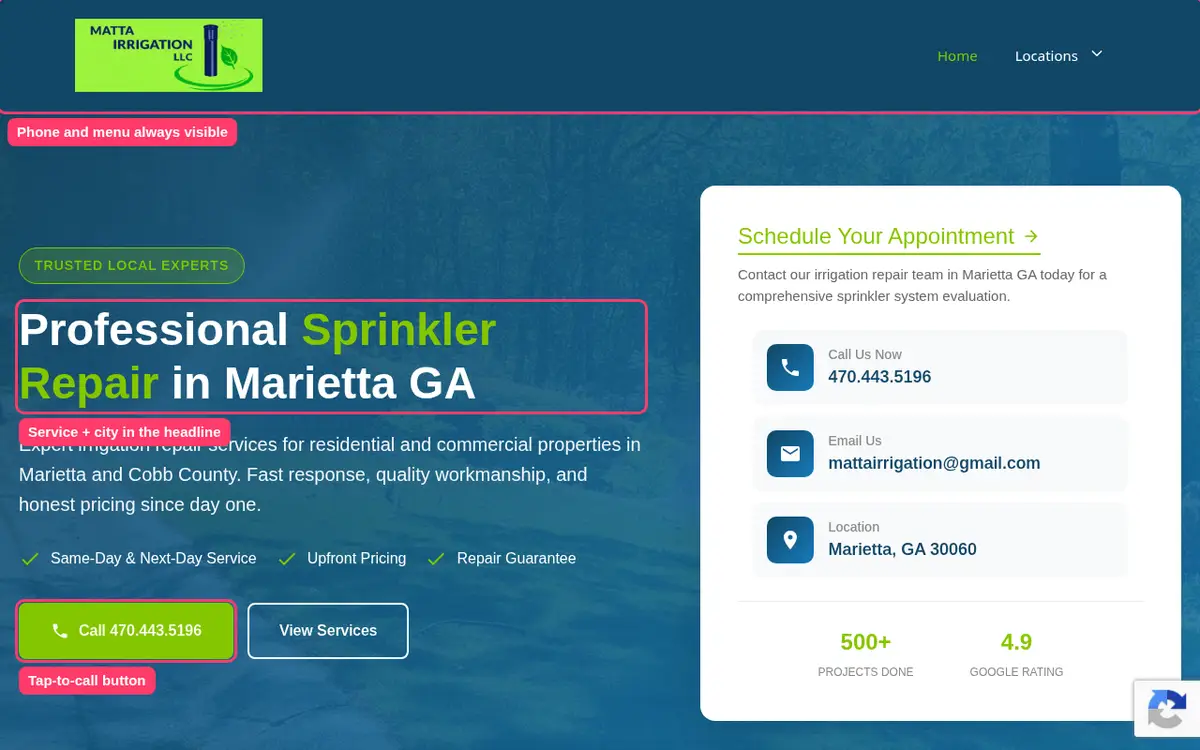
Plumbers, roofers, cleaners, landscapers, salons and similar businesses need a site that ranks in their city and makes it easy to call. Most of the value is in having the right pages: one per main service, one per town served, plus reviews and a clear phone number. Fancy features rarely matter. This is the kind of site we build, and our website pricing calculator prices it from the searches in your area. Our web design for plumbers page shows what that looks like for one trade.
Professional firms
Law firms, dental offices and medical practices compete hard on Google, and their clients take longer to decide. They usually need more pages, such as practice areas, treatments and team bios, plus careful copy. That pushes the price up, and many firms also pay for ongoing SEO.
Restaurants
A restaurant site mostly needs the menu, hours, location, photos and a way to order or book. Online ordering often comes through a third-party service with its own fees. Good photos matter more here than almost anywhere else.
Online stores
Ecommerce costs more because every product needs a page, photos and descriptions, and the store needs payments, shipping, taxes and inventory. Platform fees and transaction fees add to the yearly cost.
Website redesign cost
Redesigning an existing site usually costs about the same as building a new one of the same size, sometimes less if the content and photos can be reused. The hidden risk is losing Google rankings: if pages that already rank change their address without redirects, traffic can drop for months. Before a redesign, list the pages that get traffic and keep their URLs or redirect them.
Website maintenance cost
Maintenance covers software updates, security, backups, uptime monitoring and small content changes. On a website builder most of this is included in the plan. On WordPress, someone has to update the core, the theme and the plugins regularly, or the site becomes slow and easier to hack.
You can do it yourself in an hour or two a month, pay a designer by the hour when something comes up, or pay a monthly plan, which commonly ranges from about $25 to $150 for a small site. More expensive plans usually include content changes and SEO reporting.
How to build a website yourself, step by step
If you go the DIY route, this order saves the most time:
- Write down your services, the towns you serve and the questions customers ask most.
- Register a domain in your own name.
- Pick a builder or WordPress host and a simple template.
- Plan the pages: home, about, contact, one page per main service and one per main town.
- Write the copy for each page in plain language.
- Add real photos and your best reviews.
- Set titles and descriptions for every page.
- Connect the site to your Google Business Profile and Google Search Console.
- Test it on your phone before you publish.
What a $300, $3,000 and $30,000 website gets you
Prices make more sense with an example. Here is roughly what each budget buys for a small business. These are typical outcomes, not quotes.
Around $300 to $600
A focused site from a small studio or a careful DIY project: home, about and contact pages, a handful of service pages, mobile-friendly design on a template, basic SEO setup and a contact form. For a local service business with a clear offer, this can be enough to rank in its city and get calls. It won't include custom features or a unique design.
Around $3,000
A freelancer or small agency project: a custom or heavily customized design, 10 to 20 pages, professional copywriting, a few integrations like booking or a CRM, and more attention to branding. Good for businesses where the look of the site is part of the sale, or that need more pages than a basic package covers.
Around $30,000
An agency project with research, a brand system, custom design and development, dozens of pages, advanced features, testing and often a content and SEO plan. This is for companies with large marketing budgets, complex products or many locations. Most local businesses don't need it.
Three example budgets
These examples use typical prices to show how the costs add up. Your numbers will differ.
| Example business | Build | First-year running costs | First-year total |
|---|---|---|---|
| Solo house cleaner, DIY on a builder | $0 plus about 30 hours of work | Builder plan and domain, about $250 | About $250 plus your time |
| Plumber with 3 trucks, small studio | $299 to $630 | Domain, hosting and email, about $250 | About $550 to $900 |
| Dental office, freelancer or agency | $5,000 to $10,000 | Hosting, maintenance and plugins, about $1,500 | About $6,500 to $11,500 |
The cleaner saves money but spends weekends on it. The plumber pays a fixed price for a site planned around local searches. The dental office pays more because it needs many treatment pages, careful copy and design that matches its brand.
DIY or hire someone: how to decide
Build it yourself if most of these are true:
- You enjoy this kind of work and have time for it
- Most of your customers come from referrals, not Google
- You need a few pages and no special features
- You are fine with a template look
Hire someone if most of these are true:
- You want to show up on Google in your city against competitors
- Your time is better spent on paying work
- You need more than a handful of pages
- You want the copy and SEO done properly the first time
Many owners split the difference: they hire someone for the build and the SEO setup, then make small changes themselves afterwards.
Hidden costs to watch for
Some costs only show up after you sign:
- Content you have to write yourself. Many quotes assume you supply all text and photos.
- Revisions. Some packages include two rounds of changes and charge for every round after.
- Hosting tied to the designer. You may pay above-market rates or lose the site if you leave.
- Domain registered in someone else's name. Always register the domain in your own name.
- Paid plugins and licenses that renew every year.
- Stock photo licenses. Using images without a license can lead to legal claims.
- Long contracts. Monthly website plans sometimes lock you in for 12 to 24 months.
One-time price or monthly website plan?
More web design companies now sell websites as a subscription: little or nothing upfront, then a monthly fee that covers hosting, updates and sometimes small changes. Others charge a one-time price and bill hosting separately. Both can be fair. The difference is in the details.
A monthly plan spreads the cost and usually includes someone to call when something breaks. Over two or three years, though, it often adds up to more than a one-time build plus hosting. Check how long the contract runs, what happens if you cancel and whether you keep the site and the domain when you leave. Some plans keep the site on their platform, so cancelling means starting over.
A one-time price means you own the site from day one. You pay for hosting and any changes as you go. This suits businesses that don't change their site often and want to know the total cost upfront.
Our websites are one-time: $299 to $630 (the website cost calculator shows yours), and you own the domain and the site. Hosting and optional maintenance are billed separately and listed in your quote.
Website costs people forget to budget for
Beyond the build and hosting, a few smaller costs come up in the first year:
- Professional photos, if your phone pictures don't do the work justice
- A logo, if you don't have one yet
- Google Workspace or Microsoft 365 for email on your own domain
- Booking or scheduling software, often a monthly fee
- Online review tools, if you want help asking customers for reviews
- Ads, if you want traffic faster than SEO can bring it
None of these is required on day one. List them, decide which ones you need now and add the rest later.
How much should a small business pay for a website?
For most local service businesses, a fair budget for a well-built site is somewhere between a few hundred and a few thousand dollars. Spending more makes sense when the site has to do more: sell online, handle bookings, serve many locations or support a large marketing budget.
A better way to set the budget is to work backwards from what one customer is worth. If a new client is worth $500 to you, a site that brings in two extra clients a month pays for itself quickly, whether it cost $600 or $3,000. A site that looks great but doesn't show up on Google brings in nothing, whatever it cost.
How to save money on a website without cutting corners
- Pay only for pages people search for. Extra pages that nobody visits are wasted money.
- Write the first draft yourself. Even rough notes on your services save the writer time.
- Use your own photos. A phone in good light beats generic stock images.
- Pick a common platform. It keeps future changes cheaper, because more people can work on it.
- Choose yearly billing for builder plans and hosting, which is usually cheaper than monthly.
- Skip features you don't need yet. You can add booking or payments later.
- Own your domain and hosting account so you can switch providers without starting over.
Questions to ask before you hire someone
- How many pages are included, and how did you decide that number?
- Who writes the copy?
- Is SEO setup included, and what exactly does it cover?
- Who owns the domain, hosting and site files?
- How many rounds of changes are included?
- What does it cost per year after launch?
- Can you show me sites you have built for businesses like mine?
A good provider answers all of these without hesitating.
How to get a price for your own website
Averages only go so far. Your price depends on your market. Our website calculator looks up how many people in your city search for your services on Google, plans one page for each group of searches and gives you a fixed price from $299 to $630. You see the searches, the suggested pages and the price before we ask for an email.