What an artist website is for
An artist website isn't a shop window first. It's the place where a curator checks your CV after a studio visit, where a collector looks at more pieces after seeing one at a fair, and where someone who wants a commission decides whether to email you. Social media is where people discover you. Your website is where they decide you're serious.
That changes what matters. Clean presentation of the work, accurate details for each piece and easy contact matter more than flashy effects.
| What people type into Google | US searches per month |
|---|---|
| websites for artists | 2,400 |
| artist website builders | 720 |
| artist website design | 170 |
"Websites for artists" and "artist website" get about 2,400 searches a month, per DataForSEO. Many people searching want an artist website builder (about 720 a month) or look at artist website examples (about 590) before deciding. Smaller searches like "artist website design" and "web design for artists" get about 170 each.
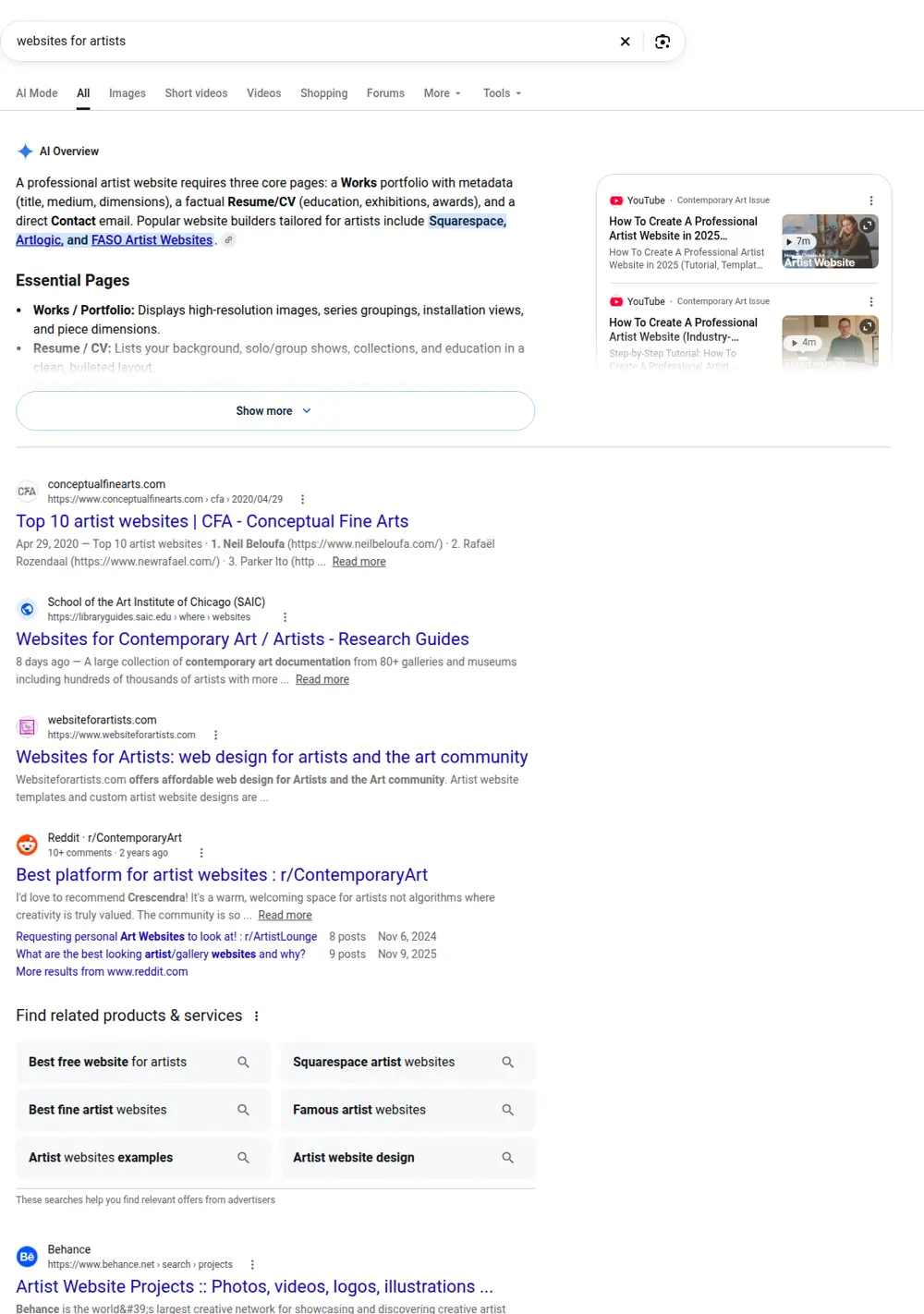
The results for these searches are dominated by DIY builders. That's fine if you want to build it yourself. If you'd rather spend the time in the studio, a portfolio artist website built for you is the alternative.
What goes on an artist portfolio website
Work organized by series or body of work
Most artists think in series, not in a single endless grid. A page for each body of work, with a short text about it, helps viewers understand what they're seeing. Within each series, show:
- Title, year, medium and dimensions
- Availability (available, sold, in a collection)
- Price or "price on request", if you sell directly
- Large, accurate images with true color
Artist statement and bio
A short bio in the third person for press and galleries, and a statement about your practice. Keep both current and easy to copy.
CV
Exhibitions, residencies, awards, collections and publications. Galleries and curators look for this page, so it should be easy to find and easy to read on a phone.
Commissions
Artist commission website pages work best when they answer the practical questions: what you take on, typical sizes and starting prices, timeline, deposit and how to start. A short request form with budget, size, timeline and reference images saves you long email threads.
Prints and shop
If you sell prints or originals directly, a simple shop or a link to your print partner keeps sales tidy. We don't build big e-commerce stores, but a small catalog with payment links works well for most artists.
News and exhibitions
Upcoming shows, open studios and fairs. An email signup turns visitors into a list you own, which matters more than any follower count.
Image quality and speed
Artists worry, rightly, that compressing images will ruin their work. The answer is careful compression: modern formats, sized to the screen, with full-size views on request. That keeps color and detail while letting the site load fast on phones, which is where most people will first see it.
Artist website builders vs a site built for you
The best artist website builder for you depends on how much time you want to spend. Builders give you templates and full control. The trade-off is hours of setup, ongoing updates and a site that looks like many others. A site built for you starts from your work, your series and your audience. You can still update news and add new pieces yourself.
What good artist website examples have in common
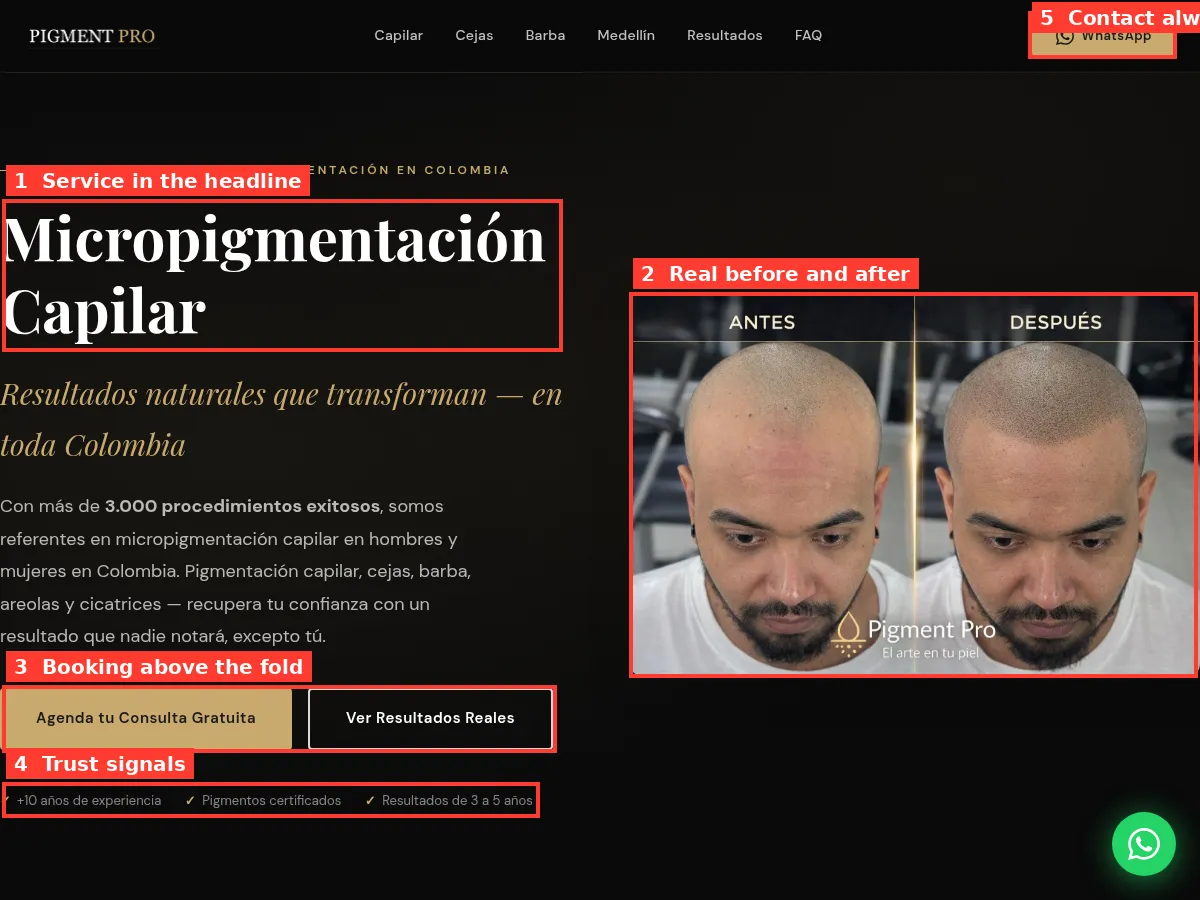
When we look at artist website examples that work, the patterns are consistent. The work loads first and fills the screen. Navigation is minimal: work, about, CV, contact. Every image has its details. There's one clear way to get in touch or join the mailing list. And the site stays current, with this year's shows and recent work near the top. None of these sites rely on effects. They rely on the work and on making it easy to see.
Your mailing list matters more than followers
Collectors who bought once often buy again, but only if they hear about new work. A simple signup on every page, with a promise like "two or three emails a year about new work and shows", builds a list that no algorithm can take away. Send a short note before each exhibition and when a new series is ready.
Fine artists, illustrators and makeup artists
"Artist" covers a lot of people. A fine artist website centers on series, CV and galleries. Illustrators need client lists and project case studies. A website for a makeup artist works more like a service business: services, packages, a booking form and a gallery of real clients. If you're a music artist, our page on websites for musicians covers that case.
Real Search Console data
This is from a service site we built. It shows how traffic tends to build over time once pages are organized around what people search for.
Building your artist website
You send photos of your work with titles, dates, media and sizes, plus your bio, statement and CV. We organize the series, write the page text around your notes and build the site. You review the draft and make changes before launch.
Price
The base is $299, plus $15 per extra page, capped at $630. Five series, a CV, commissions and a shop page is eight extra pages, or $419.