How people choose a coach
Hiring a coach is personal. People are thinking about a change in their life, health, career or business, and they want someone who understands their situation. Before they book a call, they want to know three things: do you work with people like me, how do you work, and has it helped others?
Most coaching websites lead with the coach's story. That matters, but it should come second. The visitor's problem comes first.
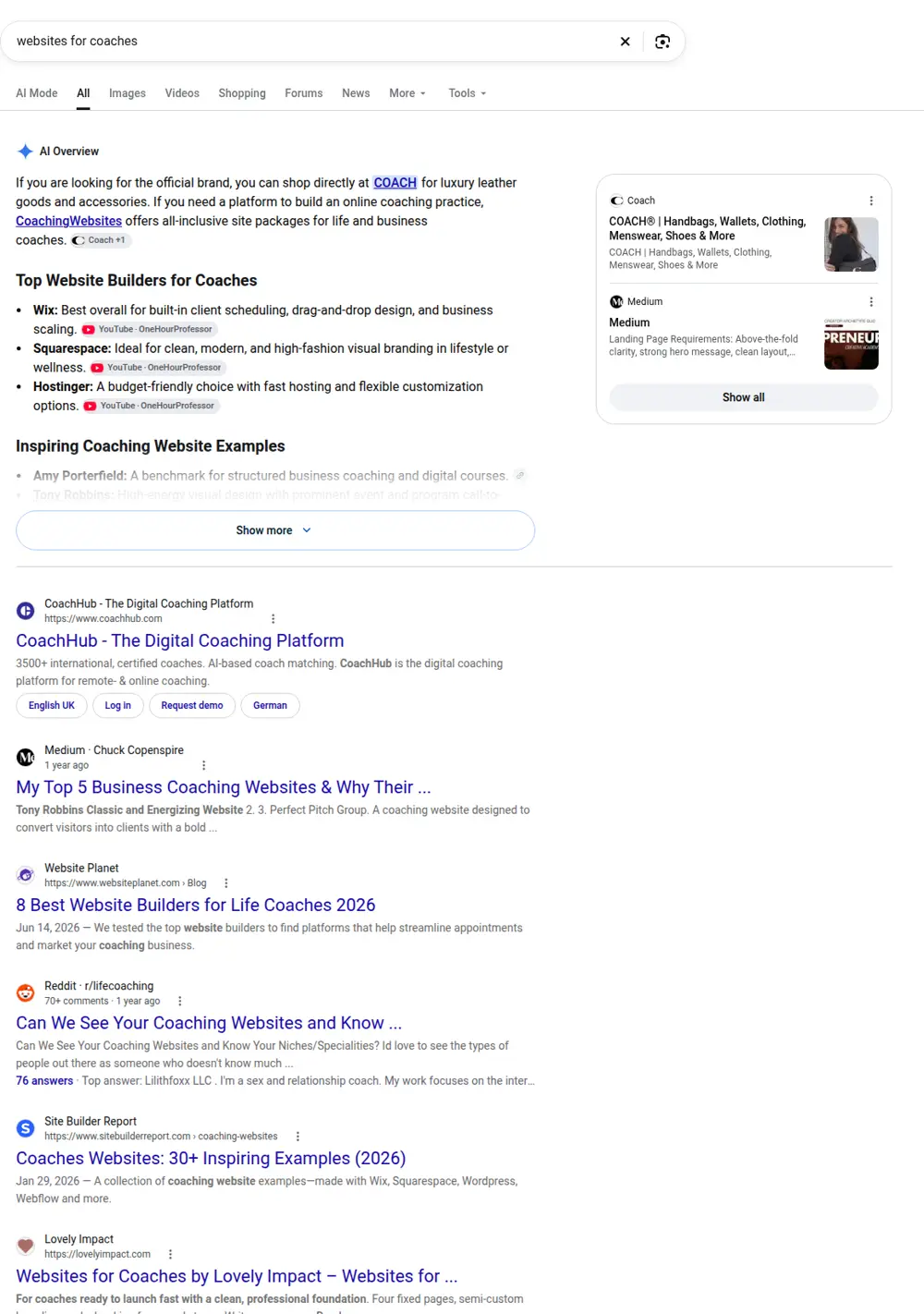
Searches for "life coach" plus a city name are modest but real. Los Angeles leads this list with about 720 a month, followed by Phoenix at 390 and Chicago at 320, per DataForSEO. Most coaches work online, so these local searches are only part of the picture.
| What people type into Google | US searches per month |
|---|---|
| websites for coaches | 5,400 |
| life coaching website | 390 |
| health coaching website | 140 |
| career coaching website | 110 |
| coaching website design | 90 |
"Coaching website" and "websites for coaches" get about 5,400 searches a month, per DataForSEO. More specific searches show how varied the field is: "life coaching website" about 390, "health coaching website" about 140, "career coaching website" about 110 and "coaching website design" about 90.
Start with who you help
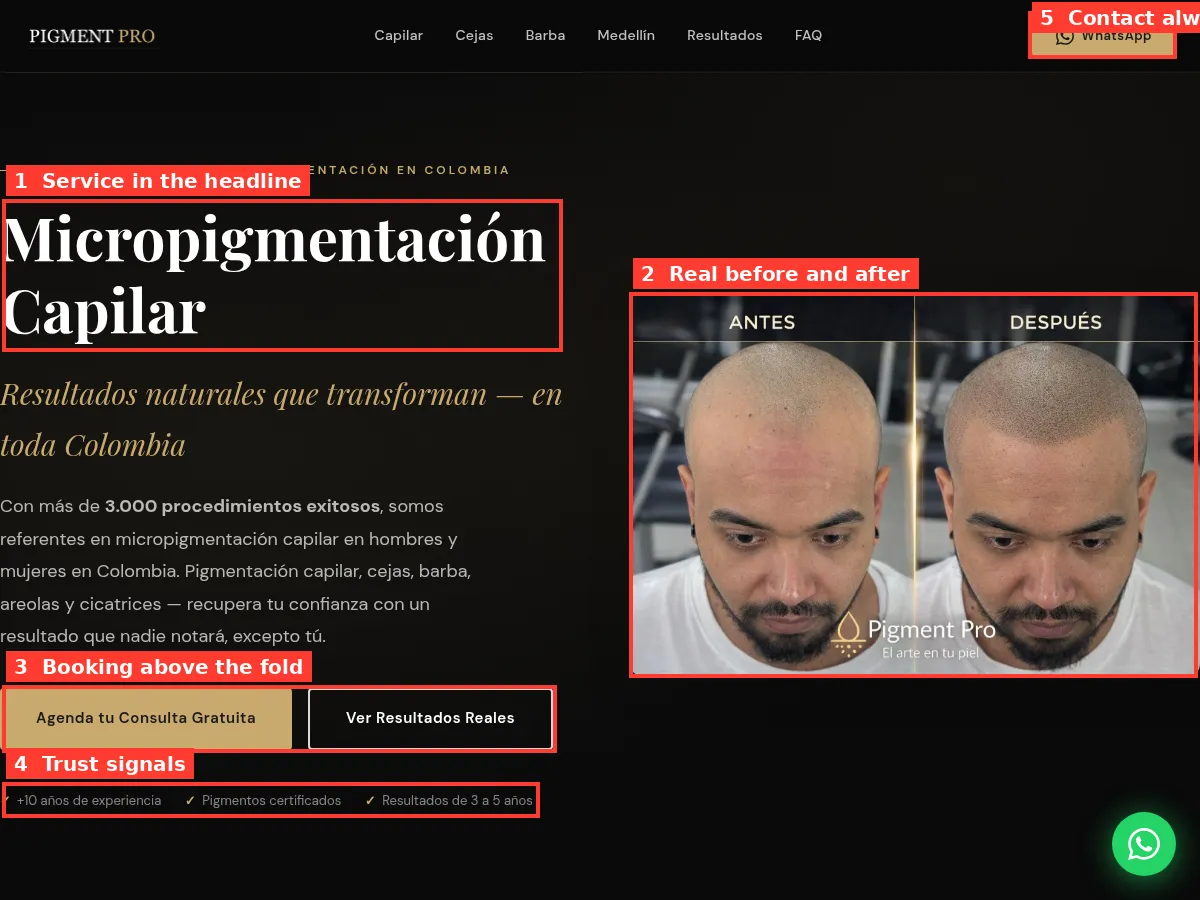
The most effective coaching websites are specific. "I help people live their best life" could be anyone. "I help mid-career women in tech move into leadership roles" tells the right person they're in the right place, and tells everyone else to keep looking. That's a good thing.
Before we design anything, we work with you to write one sentence that says who you help, with what, and what changes for them. That sentence goes at the top of the home page, and everything else supports it.
Pages a coaching website needs
Home page
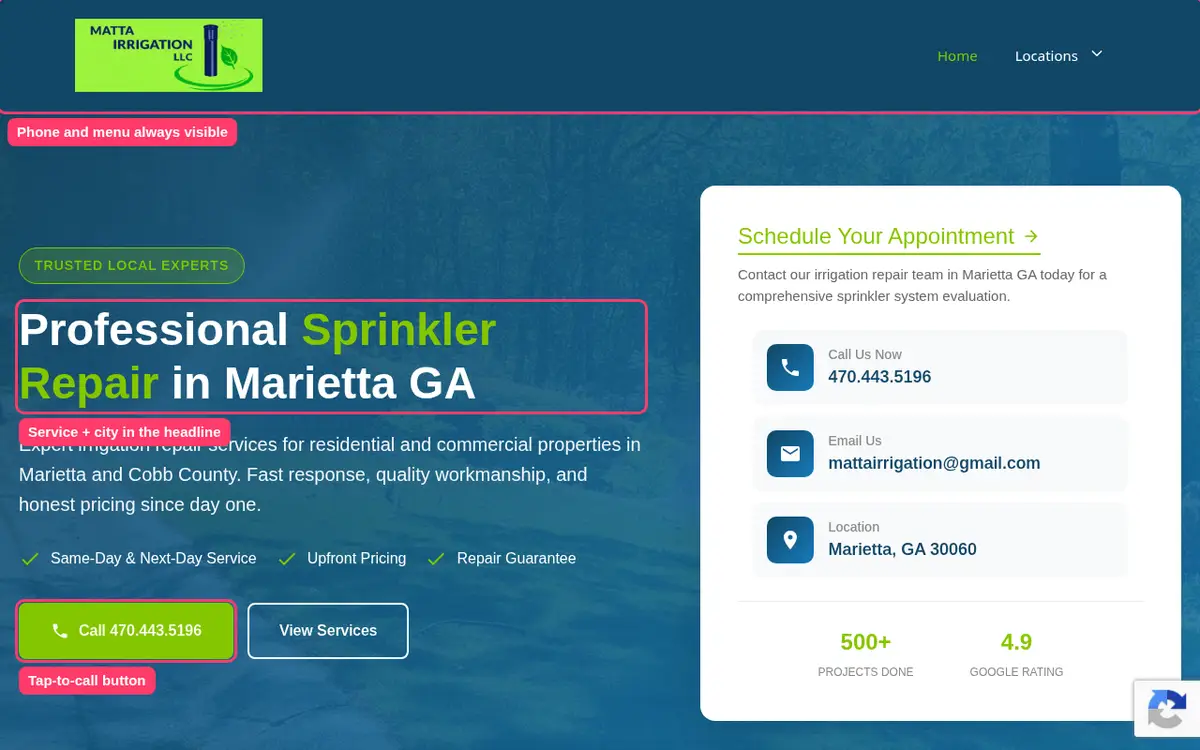
Your one-sentence promise, a short description of the problems you help with, a photo of you, proof (a few short testimonials or client results) and a "book a free call" button. Visitors who scroll should see how you work, your programs in brief and more proof.
About
Your story, told in a way that connects to your clients. Why you do this work, your training and certifications, and what it's like to work with you. Real photos, not only polished headshots.
Programs or services
A page for each offer: one-to-one coaching, group programs, intensives, workshops, courses. Each one should say who it's for, what happens, how long it takes, what's included and the price or a starting price. Clear pricing on coaching sites is less common than it should be, and it filters for clients who are ready.
Client stories
Short stories are more convincing than a wall of five-star quotes. Where a client was, what you worked on together and what changed. Use real names and photos with permission, or first names and roles if privacy matters. Avoid claims you can't stand behind.
Booking
A calendar for discovery calls, embedded on the site, with a couple of short questions so you can prepare. Put the booking button in the header and at the end of every page.
Resources and email list
A free guide, quiz, checklist or short video series in exchange for an email address. This keeps you in touch with people who aren't ready yet. Many clients book months after they first visit.
Speaking and media
If you speak at events or appear on podcasts, a page with topics, past appearances and a booking form opens another source of clients.
Life coaching website design
A life coaching website has the hardest job, because "life coaching" means different things to different people. Be specific about the areas you work on: confidence, relationships, transitions, purpose, burnout. Show how a session works and what clients usually notice after a few months. A calm, warm design with real photos usually works better than bold, salesy layouts.
Health coaching websites
A health coaching website needs to be careful about claims. Explain your approach, your training and what you do and don't do (for example, that you work alongside doctors rather than replacing them). Programs often have a clear structure, like 12 weeks with weekly calls, which makes them easier to present and price. Our page on web design for therapists covers licensed mental health practices, which have different rules.
Career coaching websites
A career coaching website works best when it names the moments people search for: changing careers, preparing for interviews, negotiating a raise, returning to work, stepping into management. Add packages like resume reviews or interview prep as smaller entry points. Many people book those first, then sign up for ongoing coaching.
Business and executive coaching
Business coaches and executive coaches sell to a different buyer. Often it's a company paying for a leader's coaching. Their websites need case studies, the industries they work with, how engagements are structured and how progress is measured. A downloadable one-page overview helps when someone needs to share it with HR or a manager.
Coaching website templates
Coaching website templates and builders are everywhere, and many coaches start there. They give you a clean look, but most templates are built around a generic "transformation" story with the same sections in the same order. The result is that many coaching sites look alike. If you start with a template, focus your energy on the specific promise, real client stories and clear programs. Those make the difference, not the design.
Showing results without overpromising
Coaching results are real but personal, and big promises hurt trust. Some honest ways to show results:
- Short client stories with a clear before and after
- Specific outcomes clients agreed to share, like a new role or a finished project
- Quotes about the experience of working with you
- Credentials and the hours you've coached, if you track them
- Logos of companies you've worked with, with permission
Avoid income guarantees or health claims you can't support. They're risky and they turn careful buyers away.
Pricing on a coaching website
Coaches often hide prices to start a conversation. The problem is that many visitors won't book a call without some idea of cost. A middle ground works well:
- Show starting prices for each program
- Explain what affects the price
- Offer a smaller paid starting point, like a single session or a workshop
- Mention payment plans if you offer them
People who book after seeing a price are better prepared for the conversation.
Writing for search
Most coaches don't need hundreds of blog posts. A handful of useful articles answering the questions clients actually ask, like "how do I know if I need a career coach" or "what happens in a first coaching session", can bring steady visitors for years. Each article ends with a link to the matching program and the booking page.
Making the discovery call easy to book
The discovery call is where most coaching relationships begin, so the path to it should be smooth. A few details make a big difference:
- Say what happens on the call. Twenty or thirty minutes, free, no pressure, and what you'll talk about. People are more likely to book when they know what to expect.
- Ask two or three questions, not ten. What they'd like help with, how they heard about you and maybe their time zone. You can learn the rest on the call.
- Send a confirmation that sets the tone. A short email with the link, a reminder of what to prepare and a link to a client story.
- Make rescheduling easy. People cancel when they can't reschedule.
If many calls end with "I need to think about it", the website may not be doing enough before the call. Clearer programs, prices and proof usually help.
Launch pages for group programs
Group programs, cohorts and workshops have a start date, which makes them different from ongoing coaching. Each one benefits from its own launch page: who it's for, dates and times, what happens each week, the price, early-bird deadlines and a waitlist for the next round. When the program is full or over, the page switches to a waitlist so the traffic isn't wasted.
Legal pages coaches often forget
Coaching sites collect personal information and take payments, so a few simple pages protect you and reassure clients:
- A privacy policy explaining what you collect and why
- Terms for your programs, including cancellation and refund policies
- A clear statement of what coaching is and isn't, especially for health and life coaching
- Accessibility information, if you offer accommodations
We add these pages to the site structure. You or your lawyer provide or approve the final wording.
Podcasts, video and social content
Many coaches build an audience through a podcast, YouTube or social media. Your website should connect them: a page for each podcast episode or video with a short summary, links to listen and a call to action that leads to your free resource or booking page. Over time, these pages also help people find you in search, because each one is about a specific topic your clients care about.
Coaching in person and online
If you coach in person in your city, say so clearly and add a page about it. Mention where you meet, the neighborhoods you cover and whether you offer walking sessions or office visits. Local searches like "life coach" plus your city are smaller than general ones, but people who search that way often want to meet face to face and are ready to book. If you coach only online, say which time zones you work in and how sessions run.
Collecting client stories
Many coaches have happy clients but few testimonials, because asking feels awkward. A simple routine helps. At the end of a program, send three short questions: what made you look for a coach, what changed while we worked together and what would you tell someone thinking about it. The answers become a story in the client's own words. Ask permission to use their name, role and photo, and offer a first-name-only option. A collection of ten honest stories like these will do more for your website than any design choice.
Email that keeps people warm
Most visitors aren't ready to book on their first visit. An email list keeps the relationship going. After someone downloads your free guide, a short series of three to five emails works well: a welcome with the guide, a story from a client, a useful tip, an explanation of how you work and an invitation to book a call. After that, a regular newsletter, monthly or every two weeks, keeps you in mind. We connect the signup forms on the site to the email service you use, so this runs on its own.
Coaching niches we often see
Every niche needs a slightly different website, even if the structure is similar:
- Relationship and dating coaches. Warm, private, with clear boundaries about what coaching covers.
- Nutrition and fitness coaches. Programs with clear structure, before-and-after stories with consent and links to apps or meal plans.
- Leadership and executive coaches. Case studies, company logos and a downloadable overview for buyers.
- ADHD and productivity coaches. Calm design, short pages and clear next steps, because the audience values simplicity.
- Parenting coaches. Workshops, group programs and resources that busy parents can read in a few minutes.
- Spiritual and wellbeing coaches. A personal voice and a clear explanation of what sessions involve.
In each case, the website gets easier to write and more effective when it speaks to one kind of client.
Speed and mobile
Most people will see your coaching website on a phone, often after tapping a link in a social post or podcast description. Pages need to load fast and the booking button needs to be easy to reach. We keep pages light, compress photos and check every page on mobile before launch.
Common mistakes on coaching websites
- A home page that talks only about the coach.
- Vague promises like "unlock your potential" with no specifics.
- No prices or starting prices anywhere.
- Testimonials with no names, photos or context.
- A booking link hidden at the bottom of the about page.
- A free guide that nobody can find.
- Ten different offers with no clear starting point.
Real Search Console data
This is from a service business site we built. It shows traffic growing after launch as service pages and helpful articles begin to rank.
How we build your coaching website
Define the promise. We start with a short questionnaire about who you help and what changes for them, and turn it into the headline and page plan.
Collect your material. Bios, certifications, programs, prices and client stories. Phone photos are fine for a start.
Write and design. We write every page in your voice, design the site and connect your booking calendar and email service.
Review and launch. You see the draft, ask for changes and approve. We launch and connect Search Console so you can see what people search for.
Price
Pricing starts at $299 for the base site, and every extra page adds $15, up to $630. A coach with three programs, a client stories page, a free guide page and a speaking page has six extra pages, so the total is $389.