How people choose a pest control company
Pest control searches come in two very different moods. Some people are in a hurry: they just saw a mouse, found bed bugs in a hotel bag or noticed termite wings near a window. Others are planning: they want quarterly service, a termite inspection before buying a house or a contract for a restaurant.
The urgent customer wants a phone number, a fast appointment and reassurance. The planner wants to understand plans, prices and what treatment involves. A good pest control website serves both without making either one dig.
Searches for "pest control" plus a city name are large in the southern US. Houston leads this list at about 5,400 a month, with Phoenix and San Antonio at 4,400 each, per DataForSEO. Warm climates mean pests all year, and steady demand.
| What people type into Google | US searches per month |
|---|---|
| pest control website design | 110 |
| pest control website | 210 |
| pest control website template | 50 |
| best pest control website | 20 |
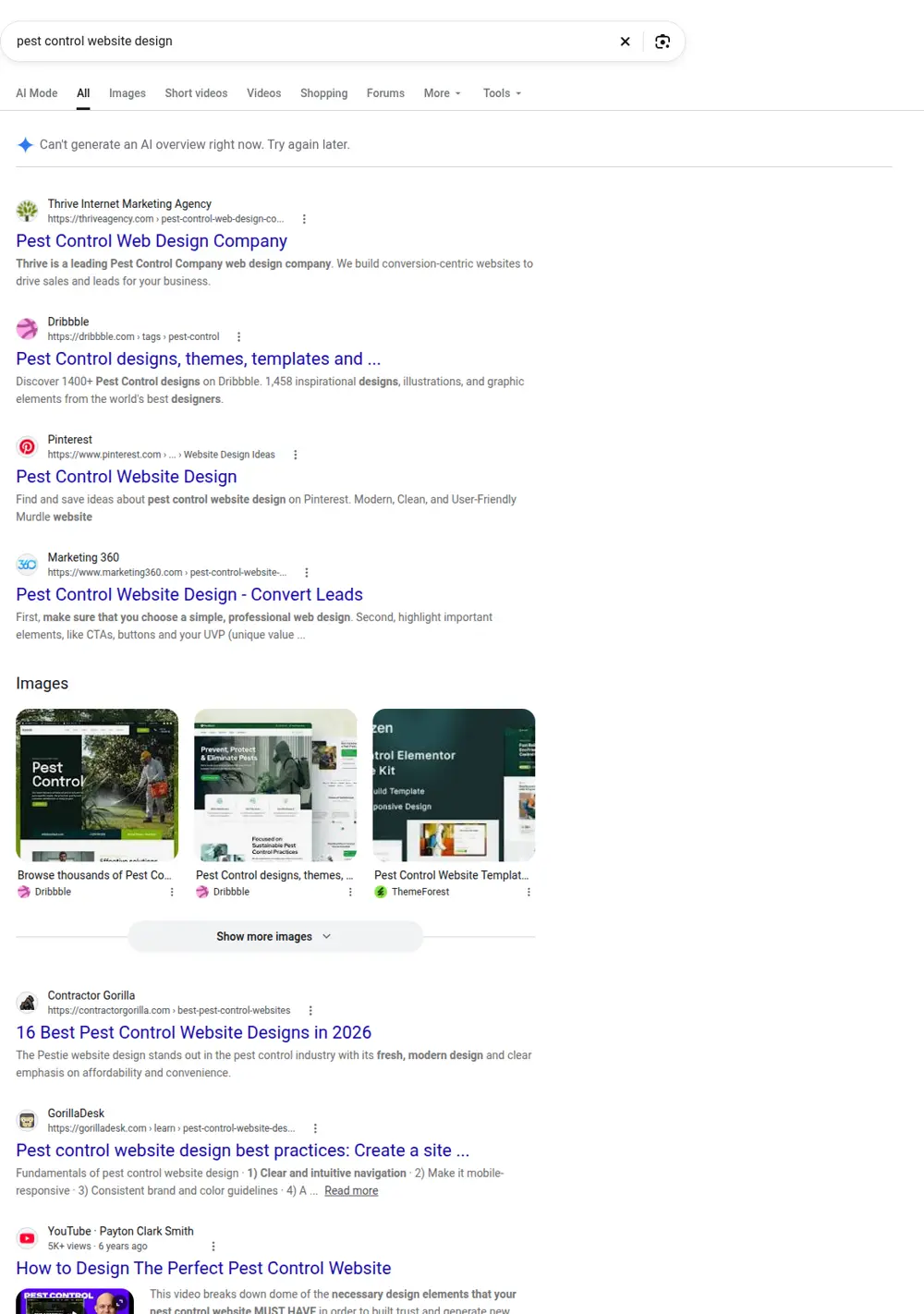
On the business side, "pest control website" gets about 210 searches a month and "pest control website design" around 110. About 90 people a month search for "website design for pest control", and 50 look for a "pest control website template". A few search for the "best pest control website" to see what good looks like, per DataForSEO.
Pages a pest control website needs
A page for each pest
This is where most of your search traffic will come from. People search for the problem, not the company: "termite treatment", "bed bug exterminator", "rodent control". Each pest page should cover:
- How to recognize the problem, with photos of signs (droppings, damage, trails)
- Why it matters, like health risks or structural damage
- How you treat it, step by step
- How many visits it usually takes
- Whether it's safe for kids and pets, and what the customer needs to do before and after
- What it typically costs, or how you price it
Common pages: termites, ants, cockroaches, rodents, bed bugs, mosquitoes, spiders, wasps and bees, fleas and ticks, wildlife removal. Only build pages for pests you actually treat.
Service plans
Recurring plans are the backbone of most pest control businesses. Explain each plan in plain words: how often you visit, what's covered, what's not, whether re-treatments between visits are free and how to cancel. A comparison table helps people choose.
Residential and commercial
If you serve businesses, give commercial work its own section. Restaurants, warehouses, property managers and healthcare facilities care about compliance, documentation, discreet service and scheduling around opening hours. Mention inspection reports and any industry standards you work with.
Service area pages
Most pest control searches include a city. A page for each main city or county, with local details like common pests in that area, climate and housing types, helps you appear in those searches. Our web design for property managers page covers a related audience if you sell to landlords.
Safety and products
Many customers worry about chemicals. A page explaining your approach, which products you use in general terms, integrated pest management, pet and child safety and any eco-friendly options, answers that worry before it becomes a reason not to call.
Licenses, guarantees and reviews
State pest control license numbers, insurance, any guarantees (like free re-treatment if pests return) and real reviews with names. Reviews that mention the specific pest are especially convincing.
Booking that works for urgent calls
Someone with a wasp nest by the front door won't fill out a long form. Make it easy:
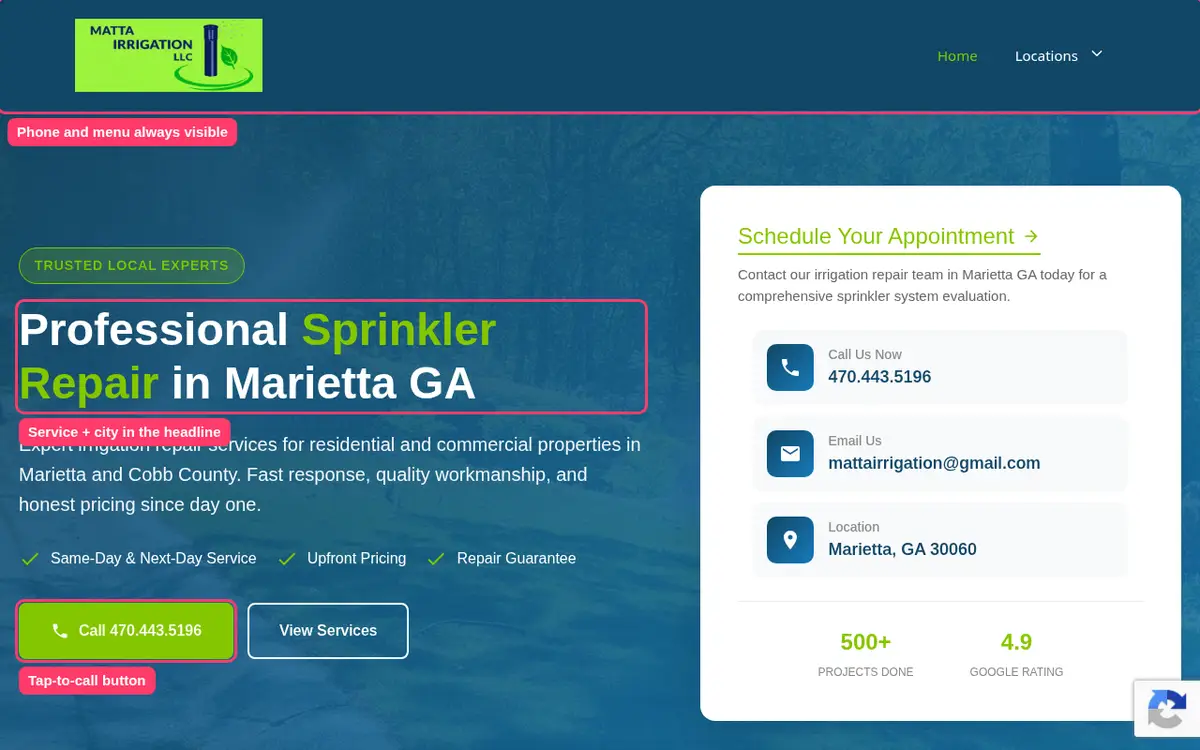
- A tap-to-call button in the header on mobile
- A text or chat option if you can answer quickly
- A short booking form with name, phone, zip code, pest and preferred time
- Clear hours, and an emergency number if you offer same-day service
Say how fast you respond. "We call back within an hour during business hours" sets expectations and builds trust.
Pricing pages for pest control
People want to know what pest control costs before they call. You can help without publishing a rigid price list:
- Starting prices for an initial service and for each plan
- Ranges for one-time treatments like bed bugs or termites, with an explanation of what affects the price (home size, severity, treatment method)
- Free inspection, if you offer one
- What's included in the guarantee
Clear pricing reduces the number of calls from people who only wanted a number, and attracts customers who are ready to buy.
Seasonal content
Pests are seasonal in most regions. Ants and mosquitoes in spring and summer, rodents moving indoors in fall, termite swarms at specific times of year. A website that updates its home page message and adds short seasonal articles stays relevant and gives Google fresh reasons to show it. A short checklist like "five signs of termites this spring" also gets shared.
Pest control website templates
Pest control website templates usually come with generic bug icons and a few service blocks. They're fine as a structure, but they don't create pest pages, service area pages or plan comparisons for you, and those are what bring customers. If you use one, budget your time for writing that content.
What makes the best pest control websites stand out
When we look at the best pest control websites in competitive cities, the patterns are consistent:
- The phone number and a booking button are visible on every screen.
- Every pest they treat has its own detailed page.
- Plans are easy to compare.
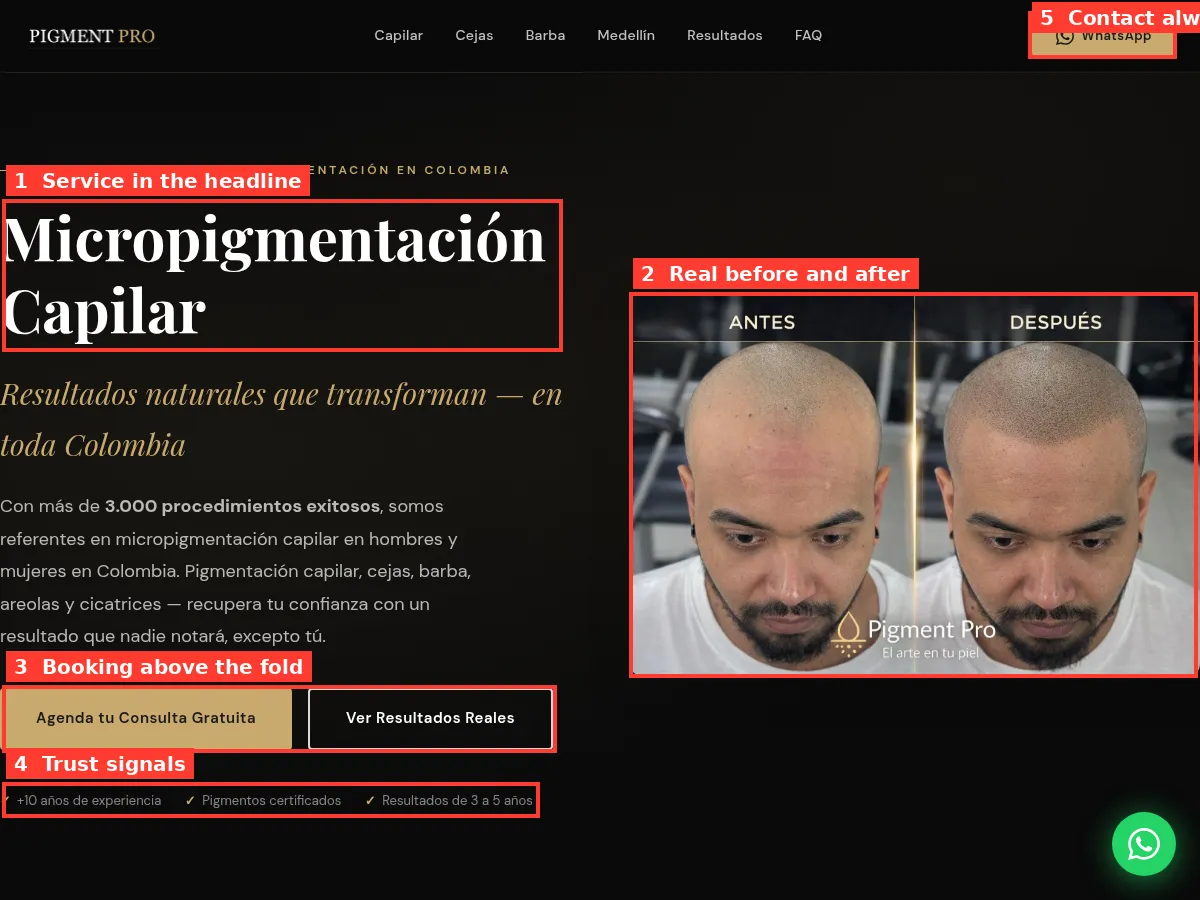
- Photos show real technicians and vehicles.
- Reviews mention specific pests and neighborhoods.
- Pages load fast on mobile.
None of this needs a big budget. It needs a clear structure and real content.
Writing pest pages that actually help
The best pest pages read like a calm technician explaining the situation in someone's kitchen. A simple structure works for every pest:
- What you might be seeing. Describe the signs in plain words, with a photo or two of real damage or droppings.
- Is it urgent? Some problems, like an active termite colony or a wasp nest near a door, need fast action. Others can wait a few days. Say which.
- What causes it. Moisture, food sources, cracks, nearby wooded areas. This helps people prevent it coming back.
- How we treat it. The inspection, the treatment and any follow-up visits.
- What you need to do. Preparation before the visit and what to expect after.
- Cost and guarantee. How you price it and what happens if the pest returns.
This format answers the questions people type into Google, so the pages have a real chance to rank for long searches like "how to tell if I have termites" or "bed bug treatment cost".
Termite pages and real estate inspections
Termite work deserves extra attention. Termite damage is expensive and people take it seriously. Many homeowners search when they're buying or selling a house and need an inspection report for the sale. If you do wood-destroying insect inspections, give them their own page and explain:
- Who usually orders them (buyers, sellers, lenders)
- How fast you can schedule and send the report
- What the report includes
- What happens if you find activity
Real estate agents often keep a list of inspectors they trust. A clear inspection page makes it easy for them to send clients your way.
Wildlife removal
If you handle raccoons, squirrels, bats, snakes or birds, keep wildlife on separate pages from insects. The searches are different, the methods are different and in many places there are rules about humane removal and exclusion. Explain how you remove animals, how you seal entry points and whether you repair damage.
Bed bugs
Bed bug searches are among the most urgent and emotional in pest control. People are embarrassed and anxious. A bed bug page should be calm and practical: how to confirm bed bugs, why DIY sprays rarely work, the treatment options you offer (heat, chemical or a combination), how many visits it takes and how to prepare. Mention discretion, like unmarked vehicles, if you offer it. Hotels, apartment buildings and property managers also search for bed bug services, so a commercial section on this page can bring in larger contracts.
Using reviews and photos
People trust a pest control company more when they can see who will come to their home. Photos of real technicians in uniform, branded trucks and equipment help. Ask happy customers to mention the pest and their neighborhood in Google reviews, then show a few of those on each relevant page. A review that names the pest, the neighborhood and how fast the problem was solved is worth more than ten generic five-star ratings.
Commercial pest control pages
Commercial clients bring steady, recurring revenue, but they search and decide differently from homeowners. A restaurant owner worries about health inspections. A warehouse manager worries about stored product and audits. A property manager wants one company for many buildings and clear reports.
Give each commercial sector you serve its own short page:
- Restaurants and food service. Discreet visits outside opening hours, documentation for health inspectors, focus on cockroaches, flies and rodents.
- Warehouses and food processing. Monitoring programs, logbooks and audit-ready reports.
- Property management and multifamily. Unit-by-unit treatment, tenant notices and bed bug programs.
- Offices and retail. Low-visibility service and preventive programs.
- Healthcare and schools. Products and methods suited to sensitive environments.
Each page should explain how you schedule, how you report and how fast you respond to complaints between visits. A request form asking for the number of locations and the type of business helps you prepare a proposal.
Prevention content
Not every visitor is ready to book. Some want to know how to keep pests out. Short, honest prevention guides (sealing gaps, storing food, reducing moisture, trimming plants away from the house) build trust and attract searches. End each guide with a simple message: if you've done all this and still see pests, here's how we can help.
Speed matters for urgent searches
Someone who just found mice wants answers now, often on a phone. Fast pages and a visible call button make the difference between a call and a bounce.
Explaining what happens after treatment
Many calls to pest control offices come after the first visit: why am I still seeing bugs, when can my pets go back in, how long until it works? A short "after your treatment" page for each common service answers these questions, reduces worried calls and makes customers more confident. Link it in your follow-up emails and texts.
Common mistakes on pest control websites
- One "services" page listing every pest in a single paragraph.
- Scary stock photos of giant insects. People are already anxious.
- No mention of safety for kids and pets.
- Plans with vague names and no details.
- A contact form that sends emails nobody checks on weekends.
- No license number anywhere.
Real Search Console data
This is from a home service site we built. Traffic grows as each service and area page starts to rank, which is the same pattern pest control sites follow when each pest has its own page.
How we build your pest control site
Plan. You price it with the calculator, which also shows search demand in your cities. We agree on the list of pests, plans and areas.
Content. You tell us how you treat each pest, what your plans include and which areas you cover. Phone photos of your trucks and team are fine. We write every page.
Build. We design the site, set up booking and make sure it's fast on phones.
Launch. You approve the draft. We connect Google Search Console, your Google Business Profile and call tracking if you want it.
Price
Base price is $299, plus $15 for each extra page, never more than $630. Ten pest pages, a plans page and six service area pages is 17 extra pages, so $299 + $255 = $554. You can start smaller and add pages later.